
The Anatomy of a Stellar Nursery

The Anatomy of a Stellar Nursery

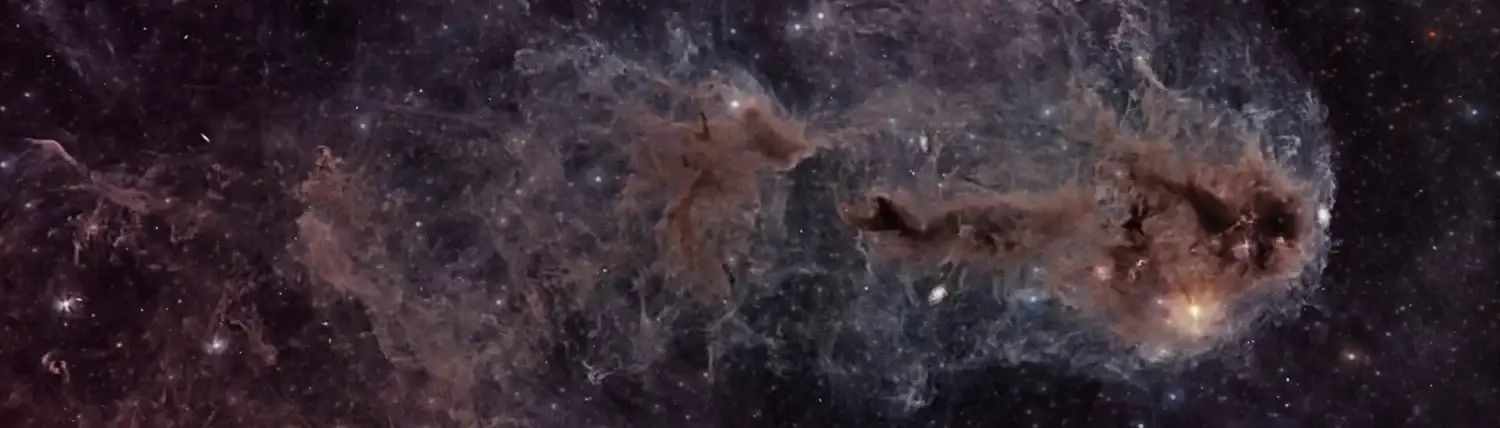
Introducing the Rosette Nebula / Stellar Nursery When I first started to image stellar nurseries, I really didn’t know anything about them.  I was told that stars are being born there – that is pretty awesome, but I was curious what was it about these light generating molecular clouds (MCs) that made them prolific star builders.   Sure, stars are also created in turbulent dark molecular clouds, but stellar nurseries really churn out the stars at a much higher level – often creating whole open clusters of stars.   Many of the stellar nurseries get very large and can even be mapped from their Halpha light signal in other galaxies.   Ok, so my interest was piqued – I had to figure out

Its Supersonic! – But it’s complicated

Its Supersonic! – But it’s complicated

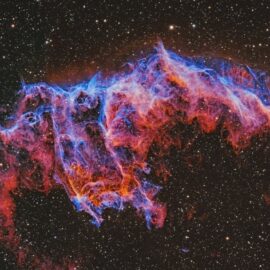
The massive explosion of a supernova sends material (and light) outwards in all direction, at velocities greater than the speed of sound. The speed of sound is another way of saying the speed that pressure or density waves can travel or disperse through the medium that it is moving through. The particles ejected by the supernova are moving so fast and so much momentum that they don’t disperse but act like a moving wall of material, bulldozing and sweeping up any additional material in its path. Along the way, the particles that make up this moving wall, or shock front involves a lot of friction between particles so that it heats up to extreme temperature (million of degrees) and the wall emits light that we see as the remnants or remains of a supernova.
This wall, known as a shock-front, eventually runs out of momentum due to is expanding spherical geometry and sharing of momentum, but remains visible to our cameras long afterwards, until it fades through cooling. The patterns of emitted light are both beautiful and distinctive from other subsonic flow patterns, and these patterns enable us to identify these objects as supernova remnants. or leftovers from the supernova explosion.