In this blog, we will discuss both how these gases turn up on our camera, and how astrophysics/spectroscopy identify and measure them. You will see that sometimes what we think we know is based on rock solid “DNA” evidence, while in many other cases, the evidence is purely circumstantial. For ease of explanation I will actually perform this task in reverse – like a mock trial – explaining what we believe the gases are and then the evidence that supports it. At the end, you may just interpret our astrophotographic images a little differently.
In the vast expanse of our Milky Way, gases form the invisible backbone, shaping everything from star formation to galactic structure. They are the subject matter of many, if not most, of our astrophotography and we cannot being to understand our galaxy and the universe without understanding what these gases are, and how these gases work.
Yet, as is much of astronomy, the gases are remote from us so we must rely on their interactions with light to determine their nature and properties. But this process is neither straightforward nor easy. The main ingredients of these gases: hydrogen (about 74% by mass, 92% by atoms) and helium (24% by mass), are generally invisible to our eyes in their native states. Even in the broader electromagnetic spectrum, galactic gases rarely interact directly with photons.
This galactic gas invisibility is largely fortunate, as it enables our telescopes to peer deep into space to see stars even on the other side of the galaxy and even galaxies deeply distant in the universe with little distortion (save for our own atmosphere and optical equipment). At the same time, there are enough exceptions to this invisibility rule that we are able to capture some of the gases, under some environmental and dynamic circumstances to capture beautiful nebula with our eyes and cameras.
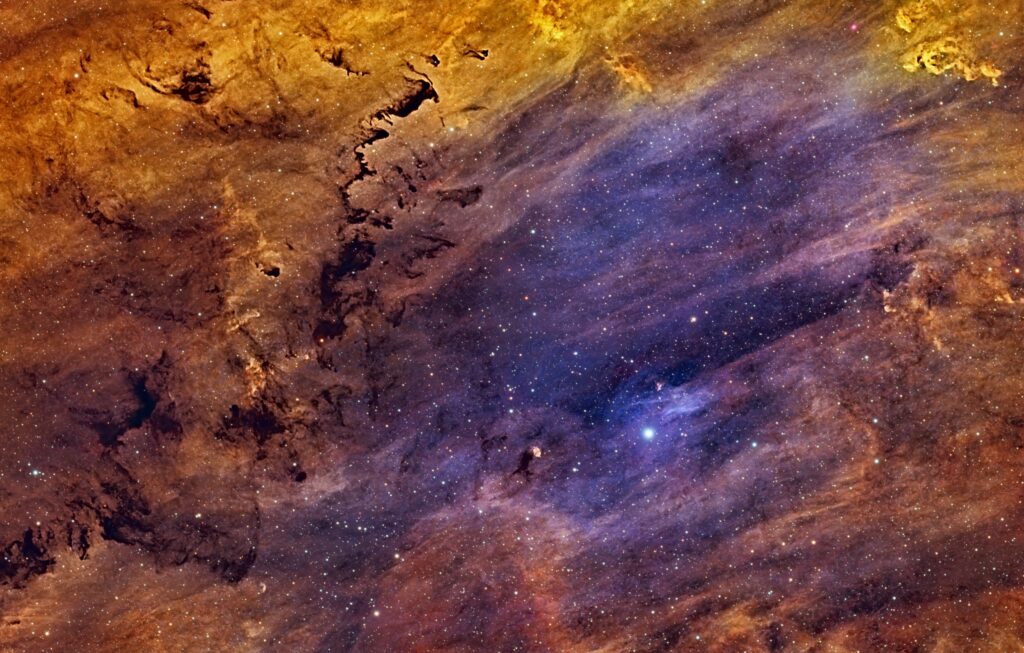
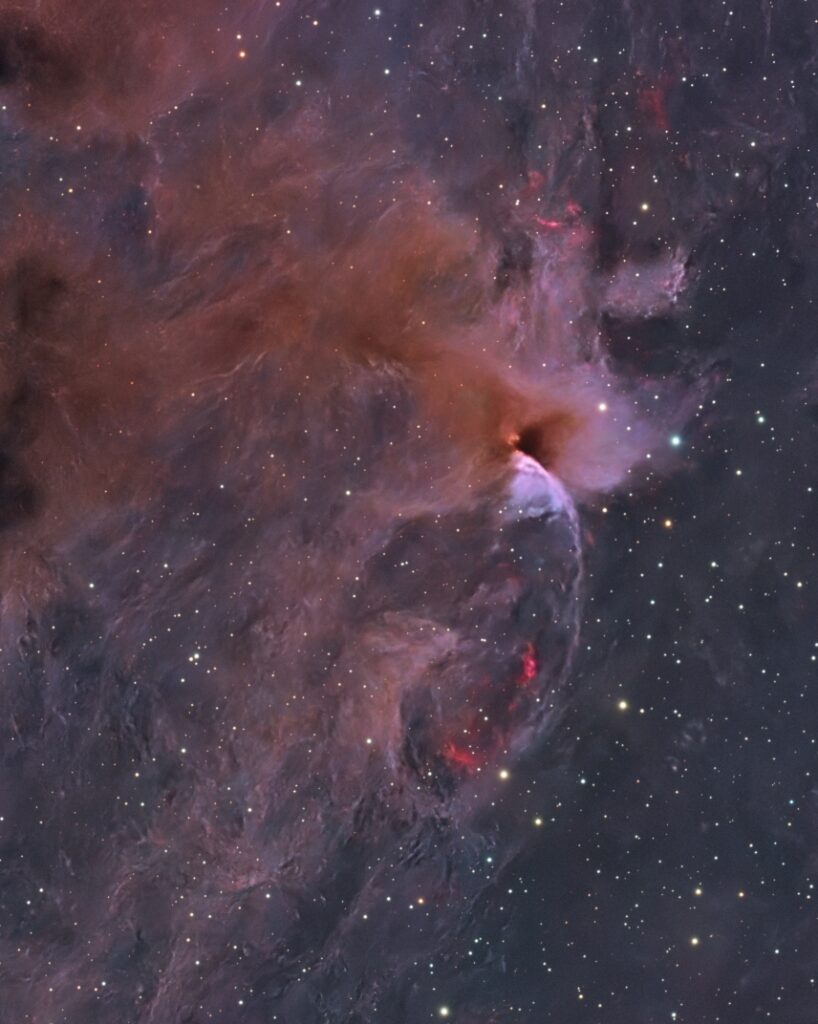
To illustrate how the gases interact and express themselves photographically, we will be referring to two kinds of nebular images, taken through broadband versus narrowband filters, and featuring different gas bodies in the major roles and under very different light conditions. Both images were taken by the same telescope and reflect similar angular fields of view. (roughly somewhat >4 degrees of sky diagonally).
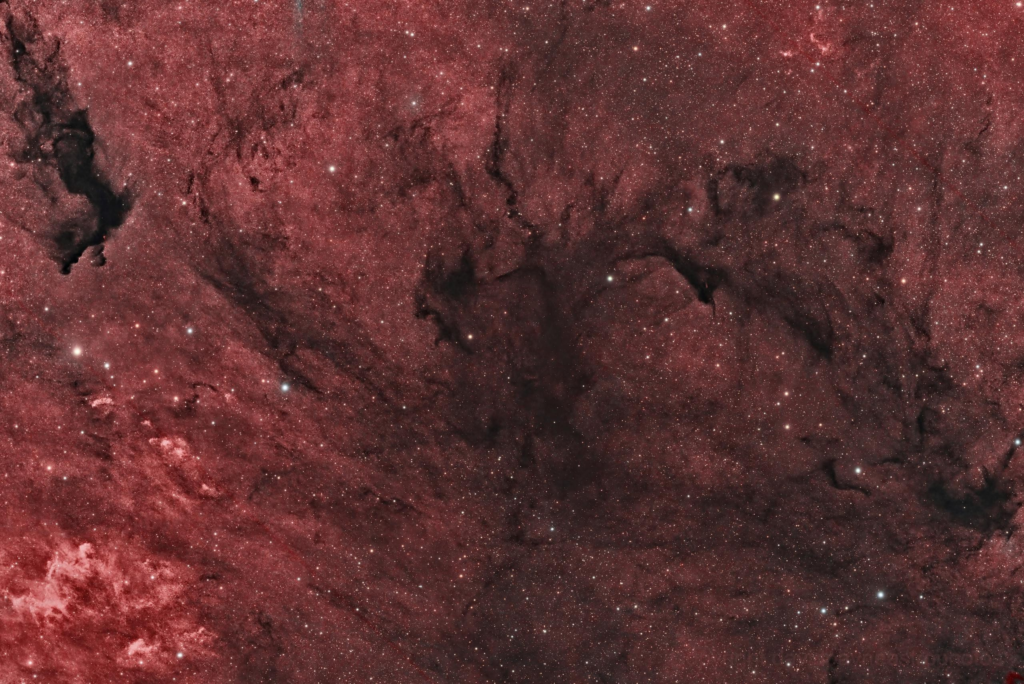
Sh2-119 - The Clamshell Nebula (2025) in Cygnus

Askar 500 FRA telescope; iOptron HEM27 mount; ZWO ASI6200MM Camera, Baader CMOS 2″ BB and 6.5 nm NB filters
R,G,B: (22,22,22 x 120s, Bin 1, Gain 26) – for stars; H,O,S: (37,28,33 x 6600s, Bin 1, Gain 26)
Total integration time = 20.2 hrs (Jul 7,13,14,15,16 2025); Vancouver Island, BC, Canada
This narrowband image of Sh2-119 or “The Clamshell Nebula” in Cygnus displays many of the classic features of stars and gas bodies within stellar nurseries.
Warm ionic medium, emanating from the hot O/B star(s) near the centre volumetrically glow in blue from the forbidden emissions of double ionized oxygen. The stellar winds are essentially blowing a tortuous bubble within a molecular cloud as it attempts to escape. Gas expansion and light emissions cool the ionic medium as it winds its way out – driven by momentum, magneto-hydrodynamics, and bouyancy. Far-UV light from the central star keeps the medium ionized until it can leave the nebula and enter the shadows of the nebula or the light dissipates.
Heat from the stellar winds along with the UV light from the stars collides with the sides of the bubble consisting of the molecular cloud itself. Here molecular hydrogen atoms are dissociated and ionized off of the cloud surface to join the stellar wind bubble.
Some of the dissociated hydrogen recaptures its electrons and emits Halpha visible light (shown as yellow) that provides the greatest detail on the surface shape of the molecular cloud. It’s brightness is dependent on both the intensity of the UV stellar light and the angle of incidence with the molecular cloud surface.
Further away from the stars, longer wavelength UV light can still ionize sulphur atoms, that then emit their own particular visible wavelength light (shown in red) that further delineates the cloud surface.
Dust protects most of the molecules within the cloud, limiting its dissociation by blocking UV light and casting shadows that provide even more details about the cloud surface. Dusty clouds that lie between our camera and the stars appear dark or black, providing more insight into the 3-D structure of the cloud.
From the light recieved by our cameras, we can surmise the composition and thermodynamic conditions of the the three gases that make up the total of interstellar media. Their positions and shapes allow us to determine the flow dynamics taking place.
The frictional interactions between the gas bodies appears violent, with evidence of strong turbulence – especially at the molecular cloud / ionic media interface where the cloud appears to be eroding. Here also, fingers, prominences, and globules – analogous to Saffman-Taylor instabilities (fingers in co-current flow) and Raleigh-Taylor instability (features in countercurrent, bouyancy driven flow) are evident from the interface – yielding more insights into the flow dynamics.
The Clamshell Nebula is roughly 2,200 light years away, giving it a diameter of 75 to 80 lightyears at 2 degrees of sky.
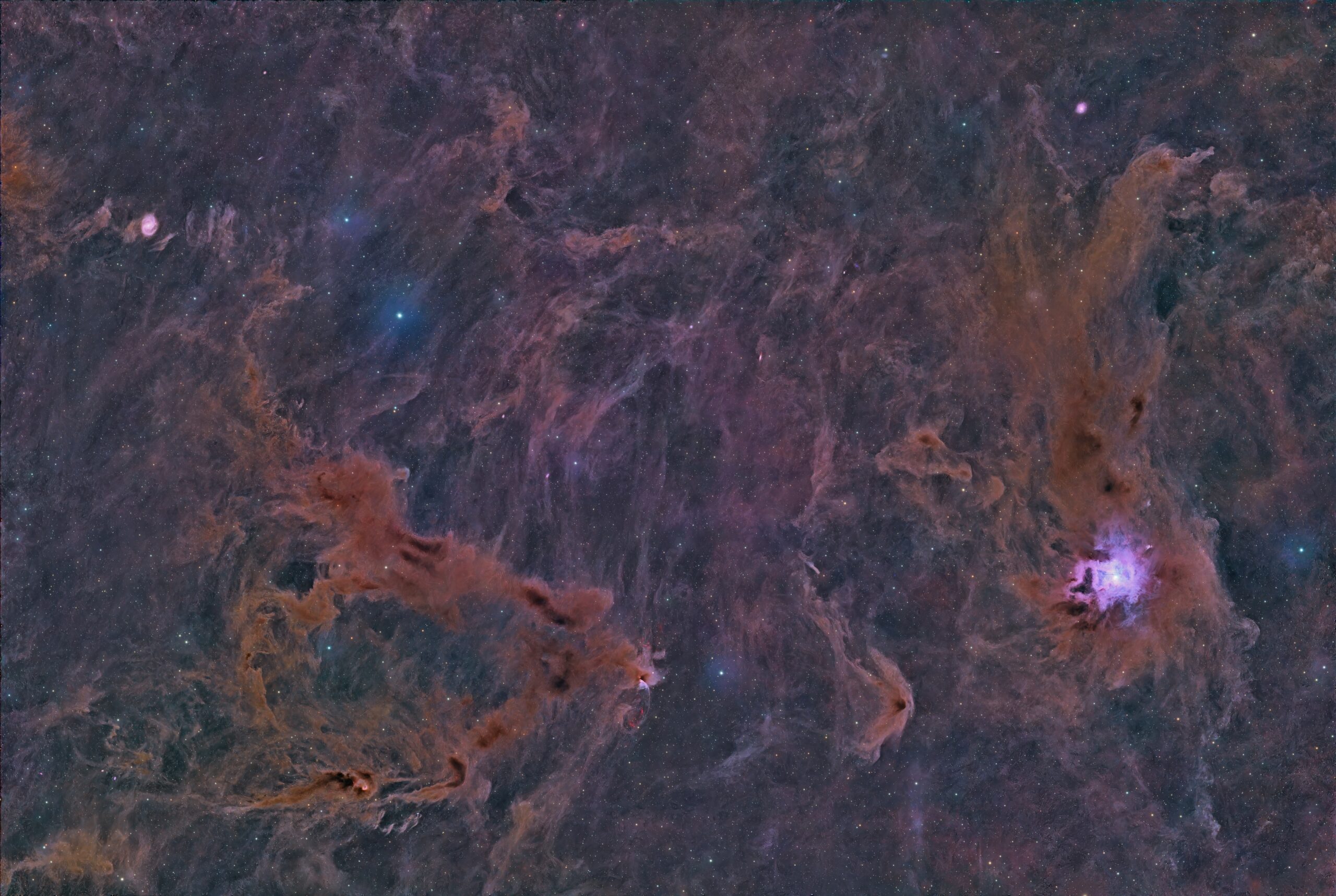
From the Iris to a Spiral - A Nebular Candy Store in Cepheus

Askar 500 FRA telescope; iOptron HEM27 mount; ASI6200MM Camera; Baader CMOS 2″ BB and 6.5 nm NB filters
Lum: (75 x 140s, Bin 1, Gain 100); R,G,B: (40,36,44 x 180s, Bin 1, Gain 100); Halpha: (35 x 6600s, Bin 1, Gain 100)
Total integration time = 15.3 hrs (Jul 17-20, 2025); Vancouver Island, BC, Canada
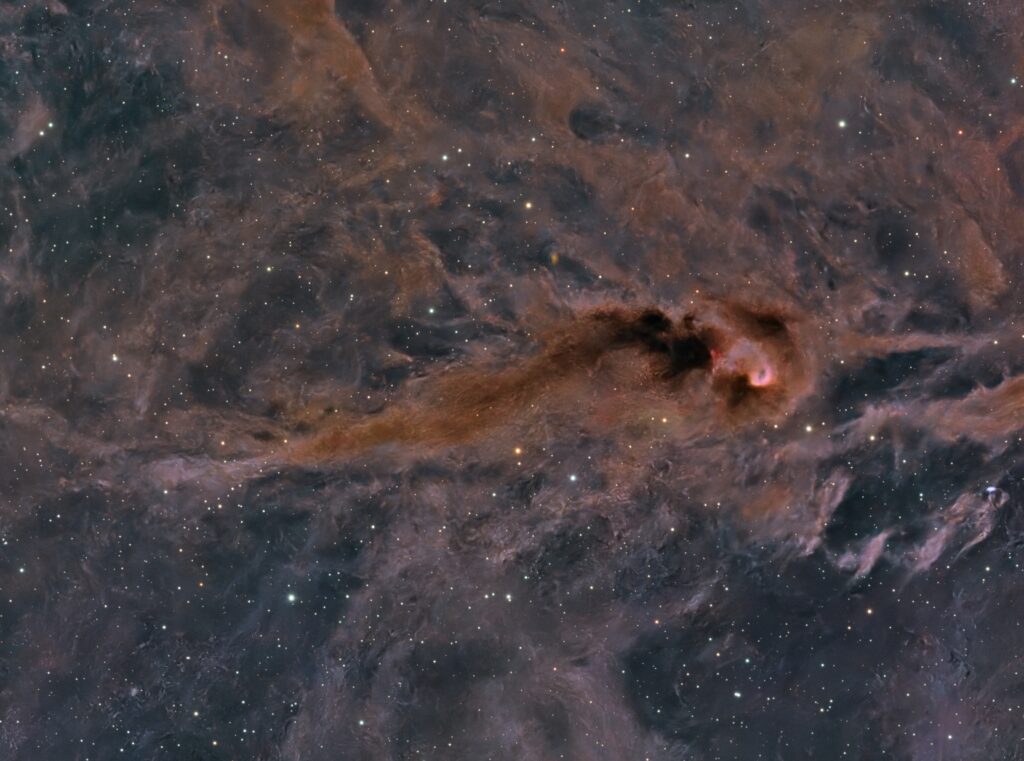
The nebulae in Cepheus are one of my favourite summer targets, and of these, the region around the Iris reflection nebula never disappoints. It seems the deeper you go, the more you find.
In this fairly wide field view, I was out to capture the star rich and dark molecular clouds field between the NGC7023 Iris reflection (Lower right) and the small semi-hidden galaxy NGC6951/52 galaxy (upper left) and include the less well known Arrow molecular cloud (LDN 468).
In terms of gas bodies / nebulae, narrowband images generally focus on the light directly from stars, or indirectly scattered, reflected, or blocked starlight. Dust, held in suspension in molecular clouds, works as molecular hydrogen tracer or proxy, for the otherwise invisible molecules that form most of the clouds mass. Warmer, and far less dense, neutral atomic medium is also optically invisible but contains no dust, letting optical light transmit through without alteration.
I did cheat a little in this image by adding, through continuum subtraction techniques, hydrogen alpha signal to the red channel to help look for potentially very warm/ionizing UV regions.
Dark nebular images, such as this give us a glimpse of the dynamics at play when molecular regions flows against neutral atomic media, often resulting in star formation – outside stellar nurseries. The images reveal friction as a major player in the cast of forces, with turbulence and multi-phase flow phenomenon apparent in the dust patterns.
In this image, it is apparent from the molecular cloud structures, that there is an atomic medium wind blowing from the right hand side to the left relative to the cloud itself. Such conditions often occur within the spiral disk, due to relative spiral-inward flow of dense molecular medium in the spiral arms, displacing the spiral-outward flow of hydrogen atoms in the gaps. Often the relative wind can erode large portions of cloud from an arm, carrying it on to the next spiral arm in the rotating galactic disc.
Otherwise, the image is full of easter eggs, including the purple (combination of blue reflections and Halpha emissions) of the Iris Nebula itself, and the spiral galaxy colour, whose light has undergone interstellar reddening via preferential scattering of blue light by the dust.
One easter egg of note, is the wind-shaped pattern of one cloud portion in particular – that is reminiscent of the similar “Rotting Fish” dark nebula. Nature never creates something only once, and by comparing patterns in the dust much can be learned about its universal properties and dynamics.
One final noteworthy object is HH215, or the Gyulbudaghian’s Nebula – Herbig Haro jets that are tell-tale of new star formation near the tip of the Arrow dark nebula. Although the light generated by Herbig Haros likely originate from many elements in the mix, it is one of the few cases where the hydrogen molecules are warm enough to emit detectable light through vibration and rotation of molecular electric quadrupoles. At normal molecular cloud temperatures of <100K, hydrogen molecules are both optically and astrophysically directly undetectable.
For reference, the foreground gas/dust bodies, including the Iris Nebula, are roughly 1300 light years away so equal size objects appear realatively 60% larger than in previous image of the Clamshell. The angular distance between the Iris nebula and the NGC6951 galaxy is 2.9 degrees. The galaxy is, of course, much more distant at 75 million light years.
What are the forms of Insterstellar Medium/Gases?
Primarily composed of hydrogen (about 74% by mass, 92% by atoms) and helium (24%), with a trace dose of heavier elements (“metals” – generated by the stars), the gases that make up the galaxy exist in three main types: ionic (ionized H⁺, (protons and free electrons) in warm regions near hot stars or hot regions in the galactic halo), atomic (neutral HI in more tepid neutral areas within the galactic disc), and molecular (H₂ in dense cold regions that compose the spiral arms).
All of these gas types collectively make up what we term as the “interstellar medium”. “ISM”, or stuff that lies between the stars, and are largely separate from one another, occupying different regions of space, depending upon their local conditions defined largely by their temperature. It is this temperature that largely influences their chemistry (ionic/atomic/molecular) and consequentially, their density. At the interfaces of these gases, pressures are roughly equal – but only roughly equal – with pressure differences driving the dynamics and encroachment or one gas body type upon another.
The hottest ionic ISM originates from stars and supernova themselves and hydrogen in its ionic form is its preferred state above 10,000K. At the high temperatures, there is too much kinetic energy in hydrogen and helium atoms and collisions are too violent for them to hold onto their electrons within its quantum orbitals. Charge forces don’t let electrons and positive nuclei get too far from one another, however, and on a continuum basis this rarefied soup of ions is overall charge neutral.
Below this temperature, hydrogen ions can recapture and hold on to their electrons to form neutral atoms – the second of our gas types. At this lower temperature, the particles can exist much closer together, at roughly the same pressure. This chemical change from ionic to neutral and indeed the capture process dramatically changes the way this gas interacts with light.
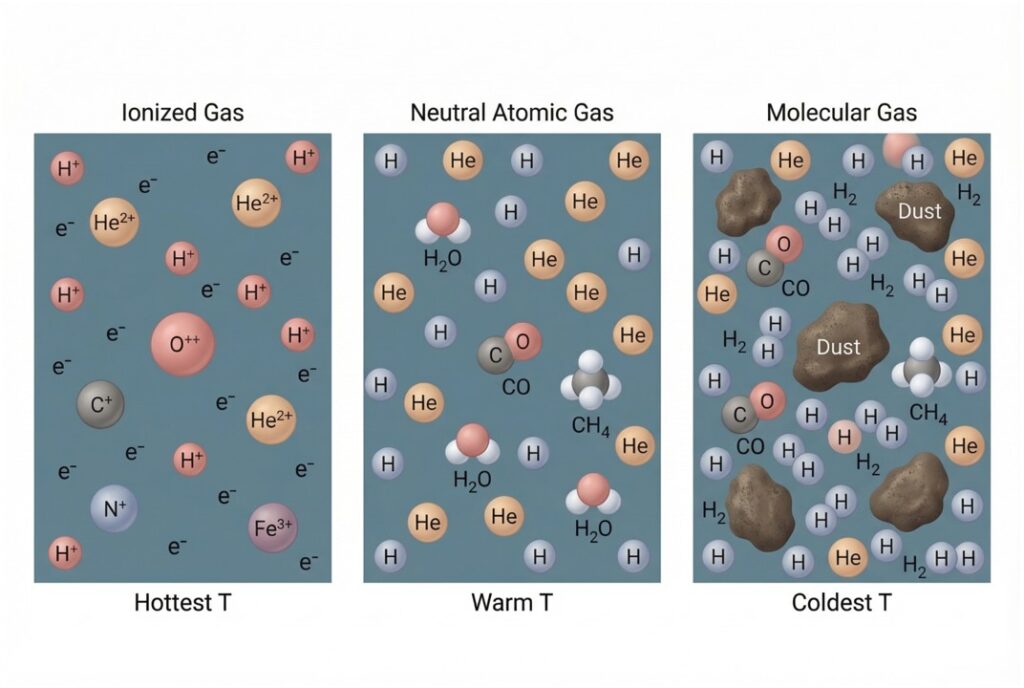
If the ISM cools further (below 200K) and provided there is a thermodynamic pathway to do so, atoms can associate to become molecules. Individual atoms meet to share their electrons in a quantum superposition orbital around both nuclear protons in a collectively lower energy state that again, changes the nature of its interaction with light. Being coldest of all, the gas bodies composed largely of hydrogen molecules forms the most dense of the ISM types.
The variation in temperature and fundamental electromagnetic/chemical properties of these types result in a huge variation in density of the ISM types that is reflected in their disparate contribution to the mass and their volume contributions to a galaxy, such as the Milky Way.
What are the contributions of Gas Types to the Galaxy?
By shear mass, the dense molecular ISM dominates the galaxy, but only occupies less than 10% of the galactic disk, forming the spiral arms. Between the spiral arms, neutral atomic hydrogen occupies two-thirds of the space between the arms, yet contributes less that 2% of the entire mass of the visible disk. The much more rarefied ionic forms occupy the final third of the arm gaps – primarily close to the burning stars that keeps it hot. The galactic halo is almost entirely formed by ionic medium, bringing its total contribution to 95% of the entire galaxy, while composing only 0.05% of the galaxy’s mass.

This summary table was compiled from more detailed information presented in two previous postings: A Galaxy of Dynamic Gases, and The Thermodynamic Model of the Eagle Nebula, but it shouldn’t matter which posts you read first. The important point to realize is that only the three gas types that compose the interstellar are the only true, thermodynamically defined gases. While we call gas giant planets “gases”, they actually are in a supercritical phase – with important properties more associated with truly condensed liquids and solids than gases. Even stars, that we sometimes debate as liquid metals vs gaseous plasma, are really supercritical. This concept will be discussed further in future postings.
For our current objectives, there are a couple of relevant things to note, stars – that form the energy source that drives the galactic machinery and gas dynamics – planets, and condensed exotics form only 3% of the entire galactic mass, and only 7% of the mass of the visible disc. The percentage of space occupied by the condensed or supercritical stars and planets is negligible.
Secondly, it is interesting to note that our own solar system exists within the ionic ISM that is the solar wind originating from the sun. You may be wondering why it is so cold in space, if the ionic medium is so hot – but that involves heat transfer that again, is a story for another day.
The ISM’s multi-type nature—ionic, atomic, and molecular—arises from thermal and chemical balances, with gravity, friction, turbulence and magnetic fields adding complexity. Observations show significant variations: molecular clouds dense at 10¹² molecules/m³ in cold regions, versus ionic gas sparse at 100 ions/m³ in hot, diffuse areas. This contrasts with Earth’s sea-level air at 10²⁵ molecules/m³, underscoring the ISM’s low density. Gas-type chemistry, including ion-molecule and neutral-neutral reactions, drives molecular synthesis, particularly in dense clouds where low densities favor binary collisions. Over 100 interstellar molecules, mostly organic, have been detected via rotational spectra, with millimeter wavelengths revealing 82 species.
Why Are ISM Gases Mostly Invisible?
The main reason we cannot see gas involves the transparent nature of the thermodynamic gas phase itself. Gases are generally transparent to visible light due to the fundamental nature of their molecular structure and the spacing between particles. In a gaseous phase state, molecules or atoms are dispersed over relatively large distances compared to solid liquid, or supercritical phases resulting in low density and minimal interaction with electromagnetic waves in the visible spectrum (roughly 400-700 nanometers).
Most common gases, such as nitrogen (N₂) and oxygen (O₂) in Earth’s atmosphere – or ions, atoms, or hydrogen molecules in ISM, have electronic energy levels that do not correspond to the photon energies of visible light. Instead, with a few exceptions, their molecular and atomic absorption bands lie in the ultraviolet or infrared regions, allowing visible photons to pass through unimpeded without being absorbed or significantly scattered. This transparency is why we can see distant objects through miles of air, with only minor effects like Rayleigh scattering causing the sky’s blue hue from preferential diffusion of shorter wavelengths.
In astrophysical contexts, this property extends to interstellar gases, enabling us to observe distant stars and nebulae with clarity. This clarity and lack of distortion by the ISM is enhanced by the extremely low comparative density of ISM to atmospheric air coupled with the near unity refractive indices of both hydrogen and helium. Nonetheless, Rayleigh scattering still occurs in space yielding a blue hue to the dark sky.
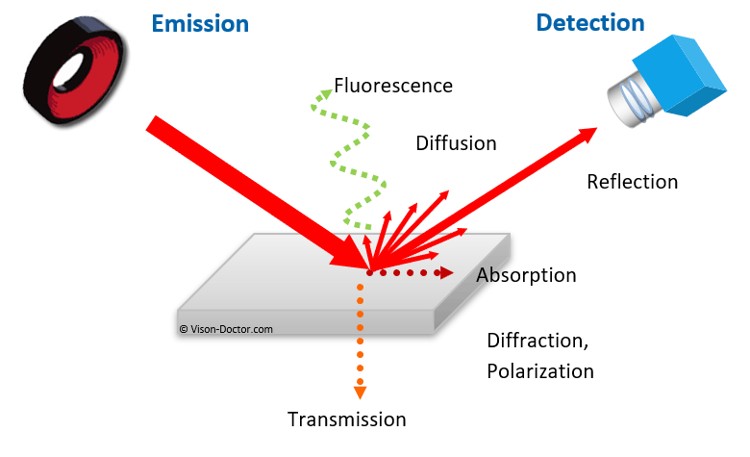
Visible light, with wavelengths of 400-700 nm, interacts with materials through absorption, scattering, reflection, or transmission. In gases, transmission dominates because atoms or molecules are sparsely distributed—often separated by distances much larger than the light’s wavelength. This results in a long mean free path for photons, meaning they can travel vast distances without encountering an atom to absorb, reflect or scatter them.
When and How the ISM Gases show their presence
Under certain circumstances, some of the ions,atoms and molecules within ISM – including hydrogen itself, can absorb or emit light at specific visible wavelengths making certain gas types, under these certain circumstances visible to us and our cameras. Indeed, the trace component atoms/molecules can also form liquid/solid phases within the gases that allow for other forms of light scattering, absorption, and reflection in visible wide-bands. It is these particular circumstances with the gas types and their interfaces that allow us to see and photograph the gases at all.
Astrophysics can identify, characterize, and measure the presence of most gases by both looking outside of the narrow range of visible light, into the whole range of the electromagnetic spectrum from radio to IR wavelengths and from UV right through to Xrays and gamma radiation. Furthermore, we can not only look for hydrogen and helium, but also the heavier elements that are produced by the stars and distributed through the ISM in the visible galaxy inhabited by the stars.
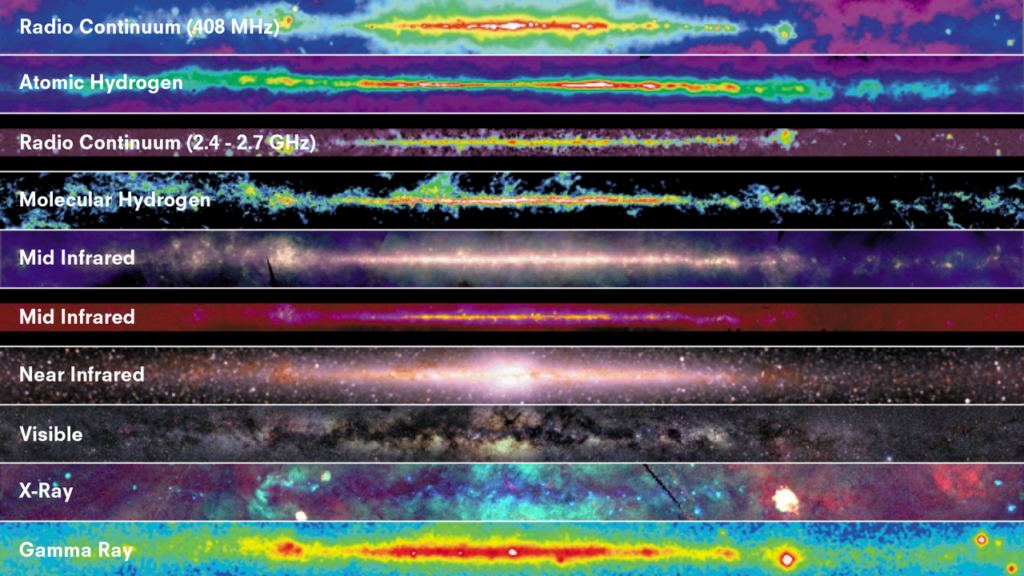
The ISM’s multi-type nature—ionic, atomic, and molecular—arises from thermal and chemical balances, with gravity, friction, turbulence and magnetic fields adding complexity. Gas chemistry, including ions, atoms, and molecules of heavier elements drive the transitions between gas types and the interactions of the gas bodies with light.
When heavier, less volatile components of ISM condense to form suspended particles of dust, they scatter, transmit, adsorb, and reflect light that enable the wide band viewing of molecular clouds in particular. Heavier, dipolar molecules, can show bands of absorption and emissions from both molecular and neutral atomic media. Finally, heavier atomic and ionic elements can express line emissions through much of the electromagnetic spectra that not only tell us what they are made of, but sometimes through red-shift, their relative velocities to us.
Dust Opacity, Scattering, and Reflectivity
Molecular clouds would be largely invisible if not for the interstellar dust grains interspersed within them. These tiny condensed matter particles, composed of silicates, carbon, and ices, interact with light in ways that render the clouds detectable. This is directly analogous to the way water droplets and ice crystal make sky clouds visible.
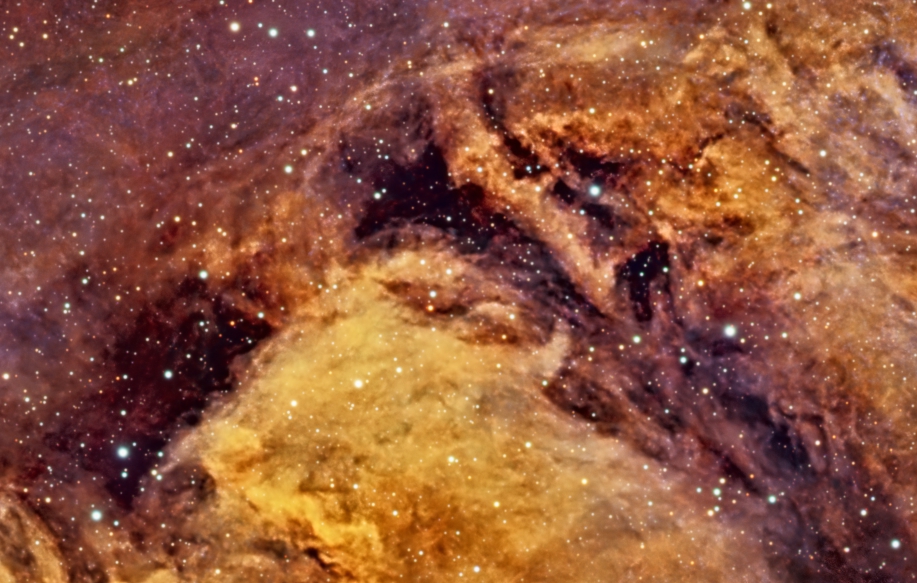
Through opacity, dust absorbs and extinguishes starlight passing through the cloud, creating dark silhouettes against brighter backgrounds and stars. This absorption occurs because dust grains have sizes comparable to visible wavelengths, efficiently blocking light, warming up, and generally the energy as IR. In dense regions of concentrated dust, like Bok globules, pillars, molecular cloud/stellar wind interfaces and dark nebulae, this leads to high optical depth, where light is heavily attenuated, making the clouds appear as shadowy voids in optical images. This visibility through transmitted light absence highlights the cloud’s structure and density variations.
Through opacity, dust absorbs and extinguishes starlight passing through the cloud, creating dark silhouettes against brighter backgrounds and stars. This absorption occurs because dust grains have sizes comparable to visible wavelengths, efficiently blocking light, warming up, and generally the energy as IR. In dense regions of concentrated dust, like Bok globules, pillars, molecular cloud/stellar wind interfaces and dark nebulae, this leads to high optical depth, where light is heavily attenuated, making the clouds appear as shadowy voids in optical images. This visibility through transmitted light absence highlights the cloud’s structure and density variations.
Dust within molecular clouds, such as within our Iris nebula region broadband image of dark molecular clouds, interacts with light through reflection/scattering and absorption. In general, reflected light tends to show us a brighter blue colour, while light that passes through molecular clouds appears to get more red. This sets up a little bit of a apparent paradox in terms of broadband imaging. The key to understanding this paradox lies in the wavelength dependence of these processes together with the size of dust particles.
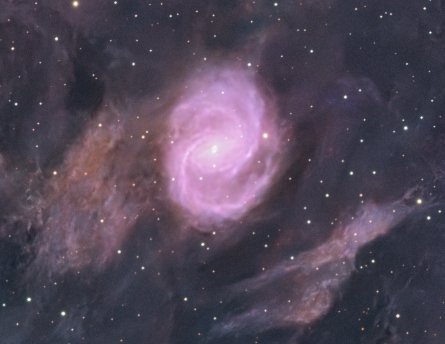
Dust grains are typically around 0.1 to 1 micron in size, which is comparable to the wavelength of visible light. This leads to the preferential scattering of shorter wavlenghts (blue light) over longer ones (red light), following principles of Rayleigh and Mie scattering.
When light from a distant star passes directly through a dust cloud toward us, the blue light is more likely to be scattered out of our line of sight or absorbed, allowing more red light to reach us unaltered. As a result, stars appear both dimmer and redder. A great example of this is our NGC 6951 galaxy that exhibits what is termed stellar reddening or extinction.
In contrast, when we observe dust clouds illuminated by nearby stars through non-dust containing media from the side (not along the direct line of sight), we’re seeing the scattered light itself – Raleigh scattered. Since blue light is scattered more efficiently, reflection nebulae—clouds reflecting starlight—appear predominantly blue. We can see this blue light in the Iris nebula itself. Granted, however, that blue reflections are most spectacular when the star itself emits predominantly blue light.
Essentially the same scattering mechanisms removes preferentially removes blue from transmitted light (reddening the source) while enhancing blue in the reflected light we see elsewhere. The red colourshift is why most of our dark nebula actually appears reddish brown in addition to dimming through opacity.
Dark nebulae often appear reddish-brown because interstellar dust grains scatter and absorb blue light more effectively than red light—a process known as interstellar reddening or blue extinction. This leaves transmitted or scattered light dominated by longer wavelengths, imparting a warm, brownish tint to the cloud’s silhouette, especially when viewed against red emission from surrounding ionized hydrogen regions.
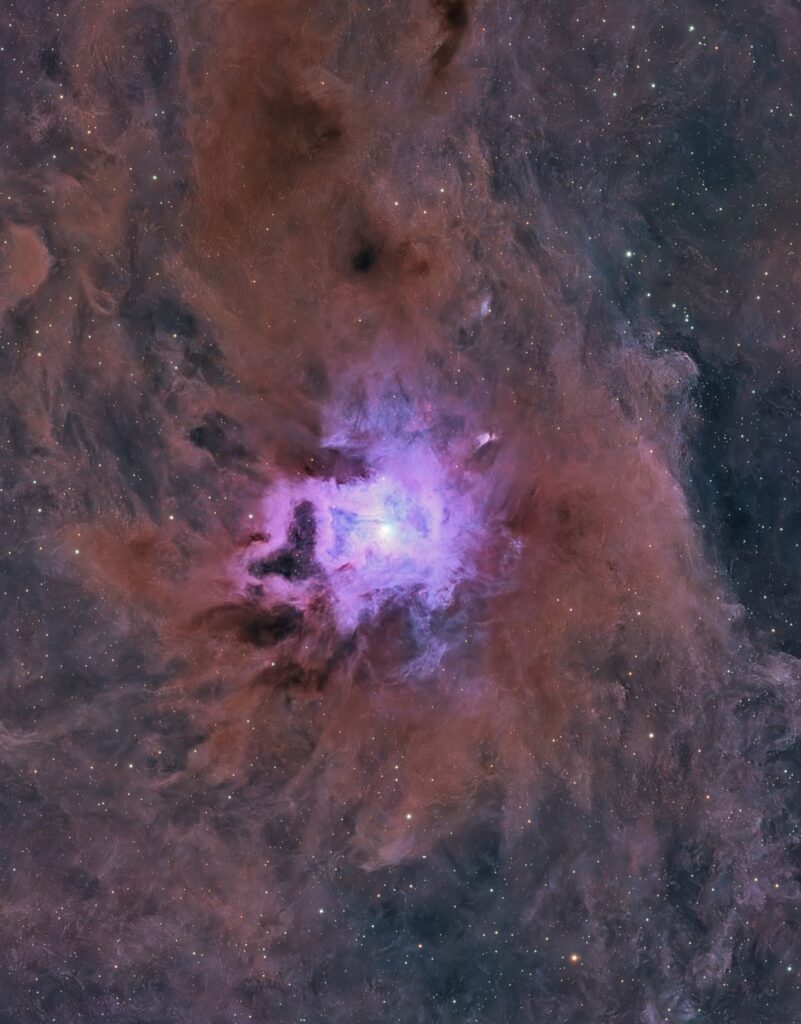
Altogether, these processes—opacity blocking light, reflection redirecting it, and scattering diffusing it—transform otherwise transparent gaseous expanses into the stunning, multifaceted vistas captured by telescopes, allowing us to study their composition and dynamics.
What is Atomic Spectroscopy?
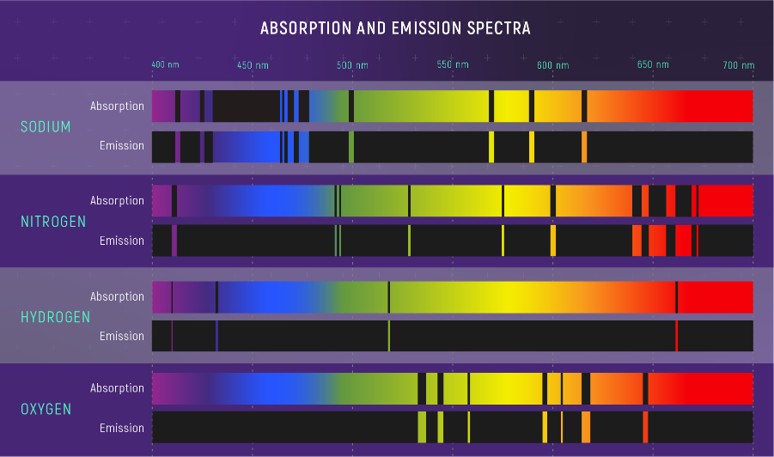
Astrophysical atomic spectroscopy is a powerful tool for unraveling the secrets of the universe by analyzing the light emitted or absorbed by celestial objects. At its core, it relies on the quantum behavior of atoms: electrons in atoms can only occupy specific energy levels, and when they jump between these levels, they absorb or emit photons at precise wavelengths, creating unique spectral lines. In stars, for instance, hot, dense cores produce a continuous spectrum of light across all wavelengths, but as this light passes through cooler outer atmospheres or interstellar gases, atoms absorb specific wavelengths, resulting in dark absorption lines. Conversely, excited gases in nebulae emit bright emission lines. This allows astronomers to identify elements like hydrogen, helium, or heavier elements, determine temperatures, densities, and even velocities through Doppler shifts.
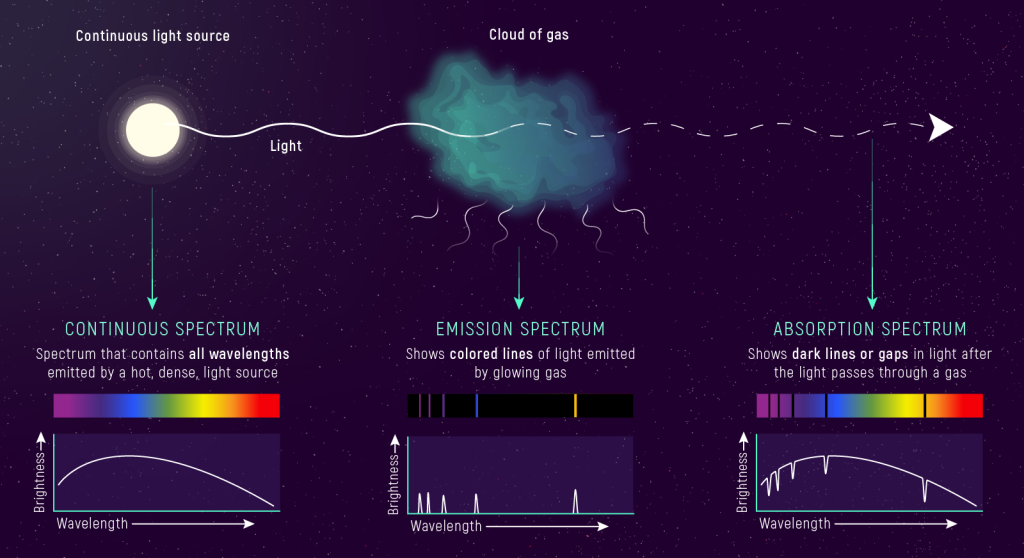
In practice, spectra from distant stars and galaxies reveal their chemical composition and evolutionary stages—Fraunhofer lines in the Sun’s spectrum, for example, match those of iron and other elements on Earth, confirming universal atomic physics. By comparing observed lines to laboratory spectra of elements, scientists can map the distribution of matter across cosmic scales, from planetary atmospheres to quasars to interstellar medium.
This technique has revolutionized our understanding of stellar formation and the interstellar medium, where transparency of gases to most visible light (as discussed previously) enables these detailed observations over vast distances.
Molecular Spectroscopy
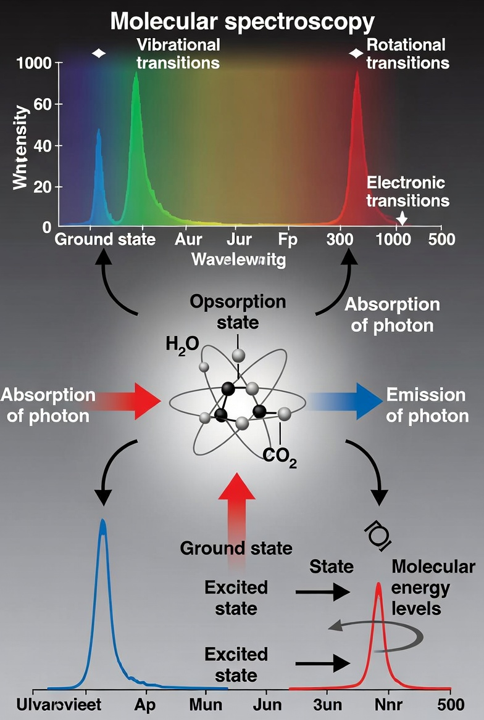
Molecular spectroscopy in space builds upon atomic spectroscopy by examining the interactions of light with molecules rather than individual atoms, revealing the complex chemistry of the cosmos. In interstellar clouds, planetary atmospheres, and comets, molecules such as carbon monoxide (CO), water (H₂O), ammonia (NH₃), and even complex organics like polycyclic aromatic hydrocarbons (PAHs) exhibit unique spectral signatures through vibrational and rotational transitions. These occur primarily in the infrared, millimeter, and radio wavelengths, where photons match the energy differences between molecular states.
Unlike atomic lines, which are sharp and discrete, molecular spectra often feature broader bands or forests of lines due to multiple quantum modes. Instruments like the James Webb Space Telescope (JWST) and the Atacama Large Millimeter/submillimeter Array (ALMA) capture these signals, allowing astronomers to map molecular abundances, temperatures, and kinematics in regions like star-forming nebulae or protoplanetary disks. This has led to discoveries of prebiotic molecules, shedding light on the origins of life.
Through both molecular and atomic spectroscopy, over 100 interstellar molecules, mostly organic, have been detected via rotational spectra, with millimeter wavelengths revealing 82 species.
Often hydrogen or indeed helium are not directly detectable at their native state and temperature. In these situations, we often have no choice but to use elements/molecules as tracers or proxies to learn about the real conditions and properties of ISM.
How we detect, measure and image ionic ISM - WIM
The direct detection and measurement of ionic hydrogen (aka protons) is difficult because by definition, this simplest of atoms has only one electron to give up, and bare protons interact minimally with light (non-relativistically). The electrons are not too far away, however, and in hottest regions electron braking near protons yields Bremsstrahlung in far-IR/X-rays. But Bremsstrahlung radiation is difficult to detect as it is generally readsorbed by other electrons in the ionic gases.
In warm ionic medium, such as in stellar winds from hotter, more massive stars within stellar nurseries, the lack of electrons in orbit around the hydrogen nuclei (protons) and helium nuclei (alpha particles) make these species invisible. So for their detection, we must rely on the trace heavier element companions associated with them that we can see, image, detect and measure – a sort of guilt by association thing.
These heavier tracer companions are ionized along with hydrogen and helium, yet still contain net electrons within orbitals that can be UV or Bremsstrahlung excited. Upon de-excitation, they can emit lower energy photons – often in the visible range – in what are commonly known as “forbidden” lines. Because they are forbidden – astrophysical notation dictates that we put those “[“ and “]” brackets around their species. Of course, they these emissions are only forbidden in the same sense that a teenager might be forbidden to stay out late at night – it doesn’t mean that they never happen, just that they are not allowed under normal circumstances.
Atomic spectroscopy extends to forbidden line emissions in ionic media by incorporating quantum mechanical transitions that violate standard selection rules for electric dipole radiation, such as changes in spin or parity that make them “forbidden” under normal conditions. In dense laboratory environments down here on earth, these forbidden transitions are suppressed because atoms or ions in metastable excited states are quickly de-excited through collisions before spontaneous emission can occur. However, in the low-density ionic media settings—like planetary nebulae, , or supernova remnants—the reduced collision rates allow these long-lived states to persist, enabling emission via weaker mechanisms like magnetic dipole or electric quadrupole transitions. This results in prominent forbidden lines, denoted in brackets (e.g., [OIII],[O II], [S II], [NII]), that dominate the spectra of ionic media and provide crucial diagnostics for electron density, temperature, and ionization states.
What all of this means is that while some spectral lines are forbidden by collisions down on earth, the ions in space have more free time to play and emit at other wavelengths.
For the various elemental species, the wavelength/energy required for ionization and excitation varies, with OIII or O+2 having the highest ionization energy (35.1 eV) of the abundant forbidden emissions. The blue/green line [OIII] emission at 495.9 and 500.7 nm are often found closest to the far-UV emitting hot large stars in stellar nurseries and generally captured via our line specific filters in narrowband images. Through broadband filters the signal is much less prominent against other sources. (note that in our table, equivalent temperatures refer to electron temperatures, that is generally different from the ion temperature in ionic medium).
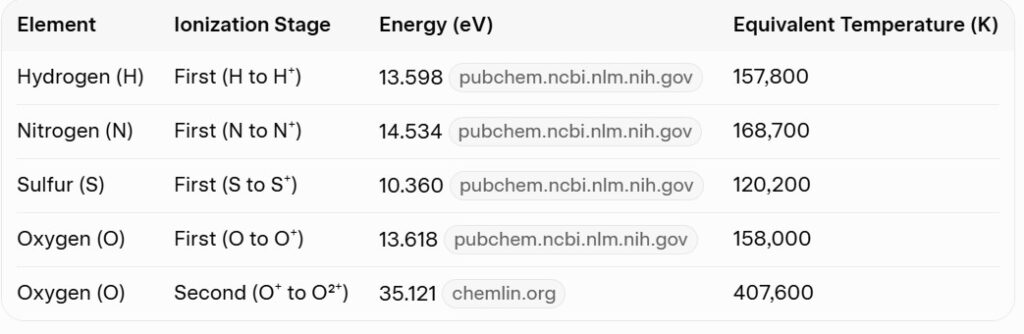
Due to the high ionization energy of OIII, we can be fairly confident that almost all species of elements are also in an ionized state, including hydrogen and helium and is a clear indication of rarefied ionic medium in the presence of high energy, far UV radiation or very hot. In these regions most trace molecules cannot form and dust cannot condense, providing little indication of its presence. The line emissions do serve a thermodynamic purpose too, in that they cool the ionic media and deplete the highest energy UV photons. Other species, such as {NII] and [OII] with lower ionization energy can be used to detect ionic media at lower electron temperatures and photon energies.
We need to note that the use of trace / companion elements to detect ionic medium is subject to errors that affect any quantitative measurements. To make precise measurements of the ionic medium, we must also know the precise concentration of these trace species along with the conditions and gas body geometry under which they are emitting. In the extreme, such as within the invisible, outer portion of a spiral galactic disk where there are no stars, the very trace ion and their forbidden emissions might be absent altogether.
Photographically, it is important to note that these forbidden line emissions present themselves volumetrically and are dependent upon the depth of emissions as well as their emission density. This fact often results in a degradation in the amount of detail that can be gleaned from these emissions – particularly within stellar nurseries and planetary nebulae. For this detail, we often rely upon Halpha or [SII] emissions, that present themselves somewhat differently.
Halpha and [SII] emissions at the margin
We normally associate Halpha emissions (656.3 nm) with ionic or HII gases, but technically, as we have discussed, HII or H+ ions are incapable of emitting such light. Instead, hydrogen line emissions can only occur where the ions are recapturing their electrons to form atoms and photons are only emitted as these electrons cascade down their orbital energies. Thus, hydrogen line emissions can only occur at the margins of ionic media, where it interfaces with surrounding neutral interstellar medium. Atomic hydrogen emerges as the dominant species beyond this margin and the necessary ionizing UV light is depleted. The margin itself is a generally thin zone of mixed ionized and neutral hydrogen.
This distinction is made because it is important in the interpretation of images containing hydrogen alpha line emissions that can, at first, be difficult to get one’s mind around. Because the marginal region between ionic and neutral media are so thin, it is useful to think of Halpha signal as presenting a surface between the two media, rather than a volume of media. Halpha brightness is dependent largely on the amount of UV photons that are exciting it – so the surfaces that are facing the source are brightest, while surfaces in the shadows of the stellar light source or facing away from it will be dim or even invisible. Because the margin forms a surface, however, the amount of detail that can be gleaned from Halpha is generally much greater than other forbidden line emissions that present volumetrically. From experience, it took me a while to bring this geometric distinction to my astro-photographic appreciation but now I believe my interpretation of nebular images is much better for it.
You may note that the ionization energy for sulphur in our table is lower than that for hydrogen itself. As a result, the line emission signal offered up by [SII] also comes from the margin between ionic and neutral media – even behind that of Halpha. But unlike Halpha, it is still a forbidden emission that is squelched at normal neutral medium densities and collision rates. Thus, it not only requires lower energy UV photons at the ionic/neutral media to express, but also be at the lower densities associated with the ionic medium or warmer neutral medium itself. [SII] signal is therefore also a surface presenting signal, its intensity comes from different places than Halpha that result in the addition of more details and definition to nebulae. In addition, the interplay between Halpha and [SII] signals at the margin surface make our nebulae much more colourful in narrowband images. (Please refer to the wide view of the Clamshell nebula, near the top of this posting)
Neutral Atomic Media and its signatures
Neutral hydrogen, exists primarily in the shadows or distant from stars in the gaps between the molecular spiral arms of the galactic disc. While dust can form at these temperatures, it is often at too low a density to create appreciable opacity, reflection, or scattering. In general dust in sufficient concentration to be visually detected chemically and thermodynamically catalyzes the formation of molecular hydrogen. Thus for the most part, neutral atomic medium is largely invisible, as far as optical images are concerned.
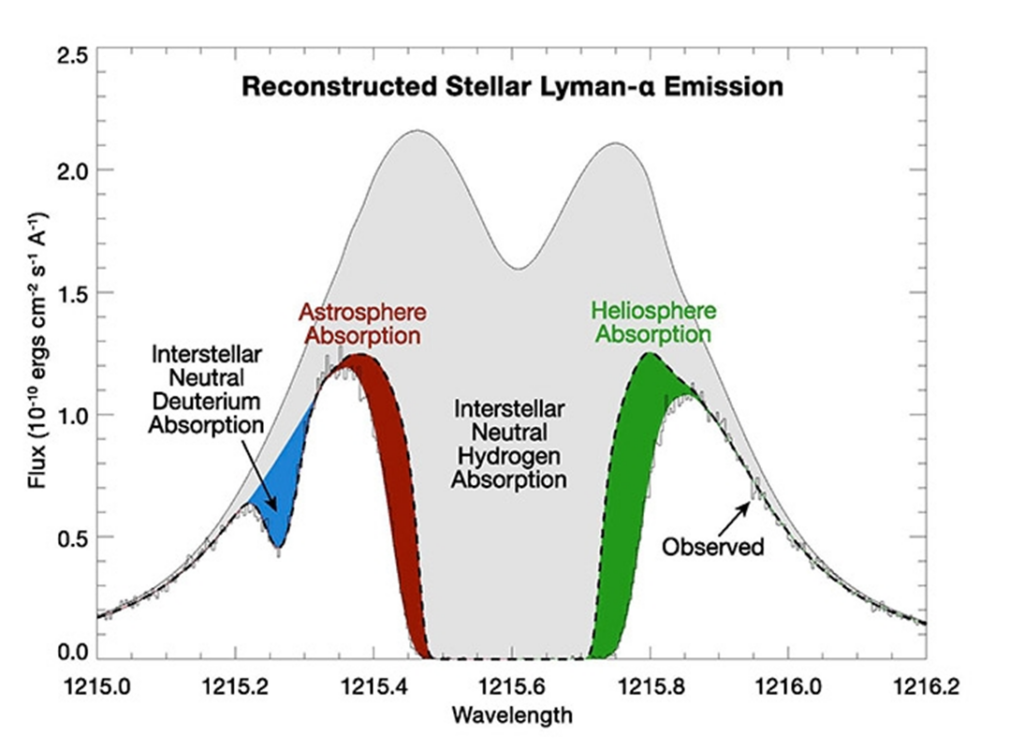
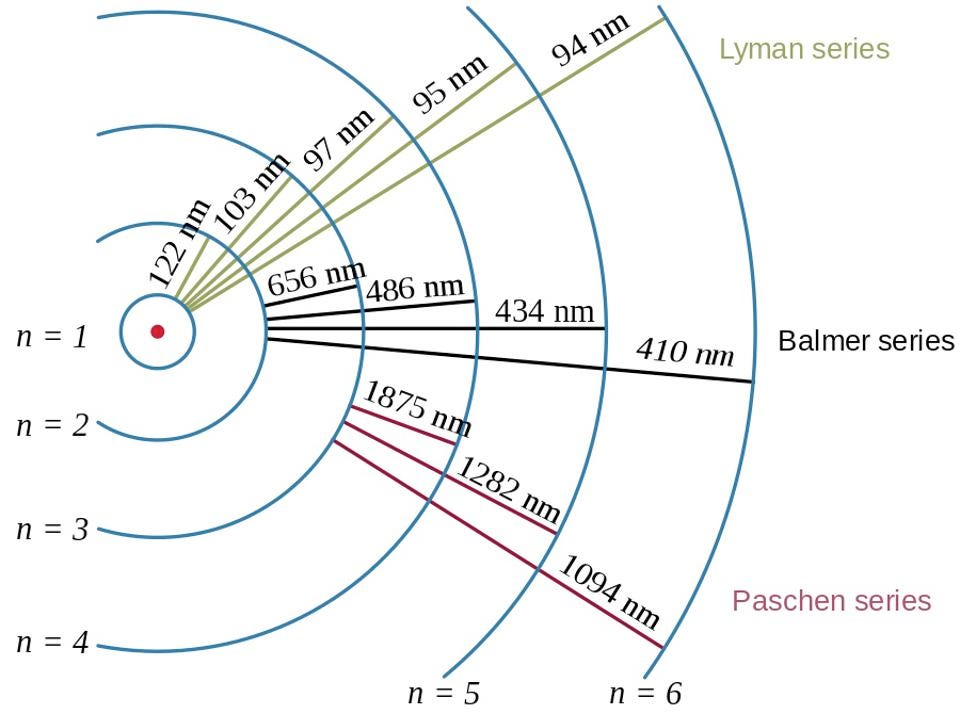
However, neutral hydrogen in the interstellar medium, often denoted as HI or simply H, can be detected via spectroscopic lines involving electron excitation, but this is predominantly through absorption spectra rather than emission. The electronic transitions in hydrogen atoms, such as the Lyman series (e.g., Lyman-alpha at 121.6 nm), occur when photons excite electrons from the ground state (n=1) to higher energy levels. In absorption, UV light from distant stars or quasars passes through neutral gas clouds, where atoms absorb specific wavelengths, creating dark lines that reveal the presence, velocity, and column density of HI. This photoexcitation is efficient because the resonance lines match the energy differences precisely, and observations from space telescopes like HST and FUSE have confirmed such detections in various sightlines. Collisional excitation by free electrons, which could lead to emission upon de-excitation, is rare in cold neutral media (temperatures ~100 K) because the excitation energy (~10 eV) far exceeds typical thermal energies (~0.01 eV), and electron densities are low.
In warmer neutral regions or photodissociation zones adjacent to H II regions, fluorescence—where UV photons excite electrons leading to cascaded emission—can produce faint Lyman lines, but these are not the primary detection method for diffuse neutral hydrogen.
What is the 21cm hyperfine H spin-flip Line
In 1951, a discovery was made about neutral atomic media that revolutionized astronomy to include an emphasis on radio astronomy. This was the emission by atomic hydrogen of a hyper-narrowband emission/adsorption line at 21cm, caused the spin flip transition (parallel to antiparallel to its photon) by its sole electron. This enabled the direct detection of neutral hydrogen atoms, at temperatures too cold and UV remote to create orbital excitations.
Part of the magic of this line detection is that direct hydrogen detection freed astrophysics from its proxy measurement via non-hydrogen tracer and the necessity to assume a tracer/hydrogen ratio. This enabled, among other discoveries, that the spiral discs of most galaxies existed far beyond the central disc that is visible via star population. Out there, there is little heavier elements to even act as tracers or proxies.
Even more, it was found that the spin orientation tended to bridge the temperatures of the neutral atomic medium, with cold media (5- to 100K) dominated by 21cm absorption and warmer media (>6000K) dominated by emission.
Furthermore, the longer radio, far IR wavelength of this light made it impervious to dust, since dust particles are much, much smaller than 21cm.
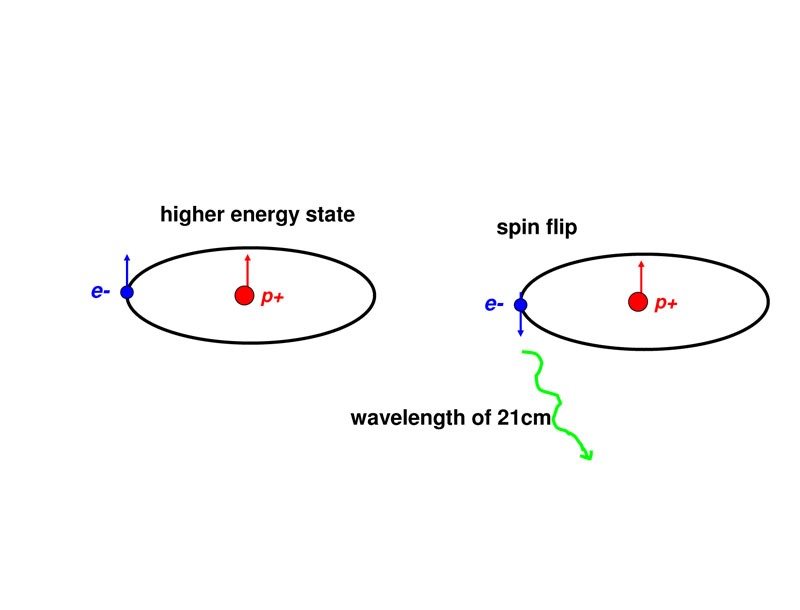
Finally, the hyperfine nature of this flip line enabled the precise determination of the mediums velocity via doppler red/blue shift. Not only could we tell where the neutral medium was, but also where and how fast it was going relative to us.
Spectroscopy in neutral atomic medium
Beyond hydrogen, numerous other atoms and molecules have been spectrally identified within the neutral atomic medium of the interstellar medium (ISM), which is characterized by predominantly neutral atomic hydrogen (HI) at low densities and temperatures around 100 K. These detections primarily occur through absorption spectroscopy, where light from background stars or quasars passes through diffuse clouds, revealing characteristic lines from trace elements and simple molecules. For atoms, common examples include neutral sodium (Na I) with its prominent lines at 589 nm and 589.6 nm; neutral potassium (K I) at 769.9 nm, and even singly ionized calcium (Ca II) at 393.4 nm and 396.8 nm, which persists due to cosmic ray ionization in otherwise neutral environments. Heavier atoms like neutral iron (Fe I) and titanium (Ti II) are also detected in ultraviolet absorption lines via space-based telescopes.
For molecules, simple species such as methylidyne (CH), cyanogen (CN), and the methylidyne cation (CH⁺) were among the first identified in the 1940s through optical absorption lines in the visible spectrum—CH at 430 nm, CN at 387.4 nm, and CH⁺ at 423.2 nm – all in the infrared.. These are found in interstallar neutral atomic medium, and their presence indicates early stages of molecular formation despite the dominance of atomic gas. Over 200 interstellar molecules have been cataloged overall, but in the neutral atomic phase, detections are limited to these simpler ones via rotational or electronic transitions in radio, infrared, or optical wavelengths.
What is molecular hydrogen’s vanishing trick
Molecular hydrogen (H₂), the most abundant molecule in the universe. constituting over 90% of the galactic mass and a primary constituent of molecular clouds where stars form, is notoriously difficult to detect directly through spectroscopic means. This challenge stems from its symmetric structure as a homonuclear diatomic molecule, lacking a permanent electric dipole moment. Without a dipole, H₂ cannot undergo strong dipole-allowed rotational or vibrational transitions, which are the basis for easily observable emission or absorption lines in the radio, millimeter, or infrared wavelengths. Instead, its transitions rely on weak electric quadrupole mechanisms, resulting in faint spectral lines that are overwhelmed by background noise or require extremely sensitive instruments. Electronic transitions, such as those in the Lyman and Werner bands, occur in the far-ultraviolet (90-110 nm), but these are heavily absorbed by interstellar dust and Earth’s atmosphere, making ground-based observations impossible and space-based ones limited to bright, nearby sources. Consequently, direct detection of H₂ is rare and typically confined to absorption against bright UV sources or in specific high-excitation environments.
Even the 21cm electron spin flip line, so important in detecting and measuring atomic hydrogen, disappears due to quantum superposition of their spins.
To map and quantify H₂ in the interstellar medium, astronomers rely, once again, on indirect proxies or tracers—molecules or atoms with more detectable spectral signatures that correlate with H₂ abundance. Carbon monoxide (CO), for instance, is a common tracer due to its strong dipole moment, producing bright rotational lines (e.g., J=1-0 at 2.6 mm) observable with radio telescopes like ALMA. CO forms in similar dense, shielded regions as H₂ and maintains a relatively constant abundance ratio (typically 10⁻⁴ relative to H₂), allowing extrapolation of molecular gas mass. Recent measurements, however, have caste doubt on the validity of this constant ratio and uncertainty in at least the precision of the results.
Other tracers include hydroxyl (OH), cyanide (CN), or even dust continuum emission, which infers H₂ from far-infrared thermal radiation assuming a gas-to-dust ratio. These proxies, often involving metals (elements heavier than helium), are essential because they provide measurable signals in shielded molecular cores where UV radiation is attenuated, enabling studies of star formation and galactic evolution despite H₂’s elusiveness. However, uncertainties in tracer ratios due to varying metallicity or environmental conditions can introduce biases in mass estimates.
Dust – Our Photographic Molecular Medium Tracer
Aside from gaseous molecules, condensed dust can also serve as a tracer for molecular hydrogen (H₂) in the interstellar medium because the two are intimately linked through physical processes in molecular clouds. Formation of H₂ vai the association of individual atoms/ions is rapidly catalyzed by dust, more rapidly than other molecules and Helium. As importantly, dust provides a shielding of molecular clouds from disassociating UV light at 4.5 eV that can pass right through ionic and neutral atomic medium.
Arguably dust’s most important role is that of coolant – condensed dust can thermally (grey body) radiate wide band IR light at wavelengths much longer than its particle size. This cooling is largely responsible for the high density of molecular clouds and represents the last destination of stellar energy with the galaxy before being sent to the cold (<4K) depths of the universe. Unlike visible and shorter wavelength light, dust itself does not block the transmission of infrared, allowing this energy to escape from the densest of molecular clouds. Finally, cooling also comes with its own feedback loop, causing more molecules to condense as temperatures drop – ultimately forming crystals of even the most volatile of them.
So to a certain degree, dust’s extinction of visible light – as recorded on our astronomical images, can indicate not only the presence of molecular clouds, but also its temperature and density. Unlike molecular tracers like CO, which can underestimate H₂ in low-metallicity or diffuse regions due to varying abundance ratios, dust offers a more universal proxy since it is less dependent on metallicity and traces the bulk gas in both atomic and molecular phases.
However, challenges include uncertainties in grain emissivity, temperature variations, and the gas-to-dust ratio across galaxies. In practice, combining dust continuum maps with velocity-resolved CO data refines H₂ estimates, revealing star-forming potential in galactic disks or extragalactic clouds. This approach has revolutionized our understanding of molecular gas reservoirs, enabling studies of galaxy evolution without direct H₂ detections.
But we can only take dust as a indicator for molecular hydrogen so far. Turbulence, chemical absorption, thermodynamics and gravitational compositional segregation can a does provide dust/molecule separation operations on these molecular cloud components. As we shall see, this can dramatically change the dust/H2 abundance ratio both locally with clouds and globally across the galaxy.
Why both Narrowband and Broadband Imaging are interesting
Broadband imaging, which captures a wide spectrum of light across visible wavelengths (often in red, green, and blue channels), offers a holistic view of astronomical targets, revealing their natural colors, overall morphology, and contextual relationships within the cosmos. For instance, in observing galaxies, star clusters, broadband techniques highlight stellar populations, molecular cloud location (dust lanes, and spiral arms), large scale dynamics and energy distributions. Images of molecular clouds themselves providing insights into evolutionary stages and inter and intra medium dynamics through apparent motions. However, broadband imaging can be limited by light pollution or atmospheric interference, often masking subtle gaseous features and perhaps less precise for dissecting internal compositions.
Narrowband imaging, by contrast, employs specialized filters to isolate specific emission lines—such as H-alpha (656 nm) for ionized hydrogen, [O III] (500.7 nm) for doubly ionized oxygen, or [S II] (671.6/673.1 nm) for singly ionized sulfur—unveiling the hidden chemistry and physical conditions within nebulae and H II regions. This method excels in better penetrating dust and revealing faint structures, as seen in the Eagle Nebula’s pillars, where narrowband data expose temperature gradients. By focusing on atomic and ionic transitions, narrowband imaging demystifies the thermodynamic drivers of cosmic evolution, such as pressure-driven outflows or radiative cooling, offering a deeper understanding of how gases self-organize into dynamic continua.
Combining both techniques in composite images enhances amateur astrophotography, allowing enthusiasts to probe the universe’s composition and conditions with backyard telescopes.

What’s in the Invisible, outer spiral disk of the galaxy
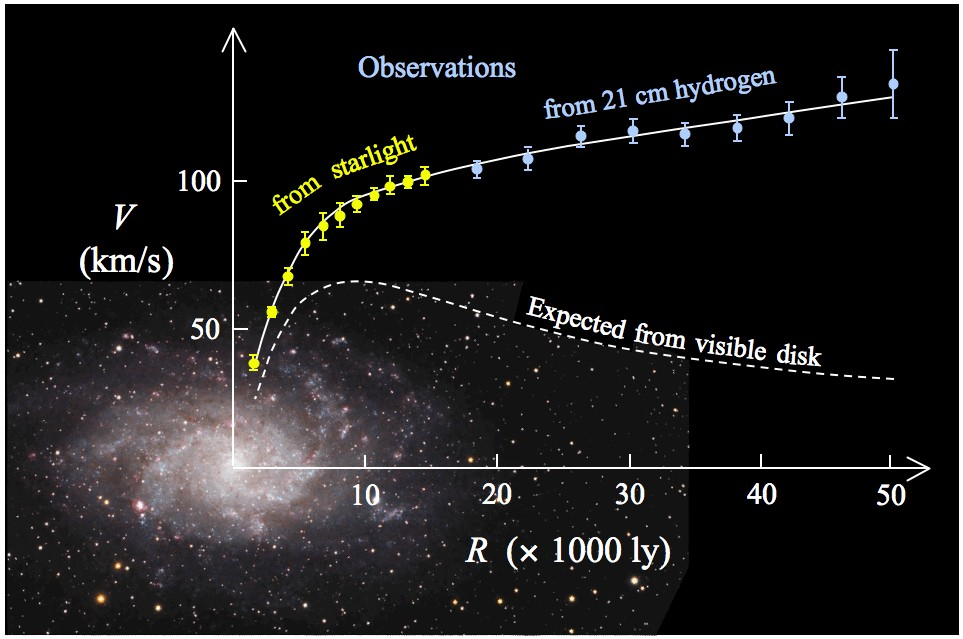
Prior to the 1950s, it was believed that dark matter – a non baryonic unicorn was thought to be the only material existing outside the galaxy on its spiral plane. This substance was imparted with the gravitational properties thought necessary in the frictionless models of the time that could explain the rotational properties of the Milky Way. However, with the ability to remotely detect atomic hydrogen via the 21cm line, we determined hydrogen atoms (and its ever present helium sidekick) were also out there, orbiting the galaxy at the same time. If anything, this doubled down on the popular assertion that dark matter was in control. Without stars, dust and “metallicity” there was no driver to infer the presence of dense hydrogen molecules. Yet something had to be there to explain the almost (but importantly not quite) constant rotational period – independent of radius. Something was needed that could exert a gravitational hold on the galactic structure.
Despite a second unicorn (gravity density waves) being created to explain the galactic arm winding problem in the 1970s, dark matter became very real to astronomers – despite both the experimental search for it and its absence in the standard model of particle physics. To this day, young astronomers dare not question its existence (not even to AI) for fear of being mocked and cast out of the academic community.
However, in the 1980s, it was discovered that helum hydride (HeH+) ionic acid provided a chemical and thermodynamic route to the association of hydrogen atoms into molecules. While this process is not as effective as dust and “metallic” molecules, its discovery certainly could be used to explain a number of astronomical mysteries. This includes the formation of hydrogen molecules in the early universe in the absence of heavier elements, yet necessary for the creation of early stars that will ultimately generate them. In our time and in our galaxy, this chemical route could explain an equilibrium concentration of hydrogen gas, along with ions and atoms within the cold outer disk. There is no astrophysical tracer out there, and certainly synthesis of hydrogen molecules via helium hydride could balance disassociation by either stray UV light or cosmic rays.
As far as observation and detection are concerned, cold molecular hydrogen fits the bill as a realistic substitute for the dark matter unicorn – no measurable interaction with light, yet exerts a gravitational pull. Hydrogen also can replace the necessity of a “gravitational density wave” unicorn in this fable, by providing the transport property of friction (the same thing that prevents hurricanes from winding up). Molecular hydrogen and associated helium atoms would also keep the baryonic ratio just where it needs to be.
Alas, after doubling down multiple times, instead of adopting this physical reality approach, is now full of more fables to buttress the dark matter legend. What do you think? – are there cold , starless spiral arms of molecules in the outer extended disk defying detection or are the dynamics of the galaxy controlled by an unfalsifiable, but perhaps sci-fi sexier, magical substance? Is the standard astronomical narrative of dark matter and energy much different from its astrological routes?