The Thermodynamic Model of the Eagle Nebula

What is the Eagle Nebula Really?

For centuries, astronomy has painted outer space as a vast, empty void—a place where gravity, momentum and light reign supreme, and gases are mere footnotes. This view, rooted in classical models, has shaped how we interpret the creation of stars and the evolution of nebulae.   But what if this perspective is incorrect?  What if there is no such thing as empty space and that invisible gases fill our galaxy.  What if gases are the true architects of cosmic creation? 

The completely free and unoccupied view of outer space has held right up to the 21st century and has divorced astronomy from the rest of science.  Astronomy had no need for the fields of thermodynamics, hydrodynamics, chemistry, electromagnetism or anything else that either describes material interactions, close molecular interactions, or any media for forces that required a medium to travel in.   Such messy physics only serve to pollute the divine perfection of Keplerian motion, Newtonian gravity, and Einsteinian curved space-time.   Down here on earth we have to dirty our hands  with heat and friction, but the heavens are pure – frictionless and reversible.

But this view is a scientific trap.   Physical laws and priciples – such as thermodynamics, hydrodynamics, friction, etc. are real and thier denial has only lead to fantasy and folly.   Astronomy happily makes up unfalsifiable physics such as dark this or that, gravitational collapse, gravity waves, etc. – that ultimately arise from the true empty space assumption.   We can escape this trap by simply applying proven scientific concepts learned down here on earth to the gases that exist up there.   All we have to do is respect the extreme conditions and scales that exist in space and everything falls into its proper place.    

In this post, we’ll kick off a series of posts focused on treating space as a continuum of gases – as evidenced by modern astrophysical data – that produce the objects that we astrophotographers love to measure and display.  We will first explore how thermodynamics—often overlooked in modern astrophysics—offers a richer, more accurate understanding of stellar nurseries like the Eagle Nebula.  Later, we will build on this foundation to explain how features, such as the Pillars of Creation” are formed, and why stellar nurseries are so good at creating stars.

The Eagle Nebula or M16, including the Pillars of Creation

Planewave CDK12.5 telescope; AP 1100GTO Mount; QHY600M Camera, – Antlia Pro Broadband Filters
R,G,B: (14,14,14 x 150s, Bin 1, Gain 26); H,O,S: (43,34,33 x 600s, Bin 1, Gain 26)
Total integration time = 20.1 hrs (Jun 10,14,15,16,18,23,25,28,30, Jul1,3,4 2025) Vancouver Island, BC, Canada

For a couple of years, I had wanted to image M16, the Eagle Nebula and, in particular, the “Pillars of Creation” from my back yard. However, the is a line of gigantic Douglas fir trees to my south that obscure my southern horizon. These tree are also growing, so I was determined that 2025 would be the year. Across a month’s elapsed time, with weather less than cooperative, I managed 20 hours of integration time, as M16 peeked through the trees. At least I can check this target off my bucket list.

The gases that make up the Eagle nebula in the constellation Serpens are about 5700 to 7000 light years away.  I has been extensively image by the Hubble telescope, but I don’t think mine compares too badly.  It displays many of the characteristics and patterns visible in other stellar nurseries – gas complexes where many stars are born.

For a full resolution, downloadable version of this image, please visit the RASC-Victoria Centre Zenfolio site or Astrobin.

What Is Outer Space, Really?

As children, most of us were taught that space means a continuous expanse that is free, available, and unoccupied. This view — prevalent well into the 20th century — shaped how we imagine the cosmos: a perfect vacuum where nothing exists between the stars. Yet this idea creates a sharp divide between the space in your closet or garage and the space beyond Earth’s atmosphere.

On Earth, “space” in everyday terms assumes something occupies it — usually air, a gas that can be easily displaced by a solid object like clothing or a car. The gas yields without resistance, and the solid walls of the container (closet or garage) define the boundaries. Outer space, by contrast, has long been portrayed as truly empty: no gas, no medium, no sound, no breath. This distinction has profoundly influenced astronomy, allowing it to remain largely isolated from disciplines that study material interactions — thermodynamics, hydrodynamics, chemistry, electromagnetism — and focus instead only on forces that act at a distance: inertia, gravity, light, and later magnetism.

Gas, the invisible substance all around us on Earth, was effectively banished from astronomical language. Even today, we speak of “molecular clouds” laced with dust rather than hydrogen gas, or “interstellar medium” instead of ionized gas. The term “gas” is reserved almost ironically for stars and gas giant planets — the very objects that are least like true gases in the thermodynamic sense.

Astronomers had strong incentives to defend this “space as void” model. It set their field apart from astrology not just through better predictions of planetary motion, but by providing a scientific explanation rooted in Kepler’s laws, Galileo’s observations, and Newton’s mechanics. This framework delivered remarkable successes: discovering new planets, tracing comets and asteroids, and modeling star motions in globular clusters. Modern n-body simulations and cinematic visualizations still rest on this frictionless, particle-based paradigm.

The secret to its longevity was simplicity: by excluding real gases and their complexities, astronomy could maintain its elegant mathematical purity — along with the prestige and funding that came with it.

Right after checking the "solar winds" (whatever they are - a gas maybe?) Apollo 15 astronaut Dave Scott demonstrates that. in the "emptiness" of space, where friction is absent - a feather and an hammer will fall simultaneously. But is there really no atmosphere on the moon and is friction absent? And how precise is this test? Are we lying to children that space is frictionless?

Outer Space Is Filled with Gas — the Same Phase We Breath, Sail, and Study in Laboratories

The industrial revolution of the 19th century turned scientific attention toward the nature of matter in pursuit of more efficient machines. These advancements in thermodynamics, fluid mechanics, and chemistry far outpaced astronomy, which for a time remained focused on mapping and cataloging celestial objects.

Then came one of the most profound discoveries in the history of astronomy: everything in the universe is made of the same atoms and molecules, governed by the same physical laws. The development of spectroscopy and cameras sensitive to non-visible wavelengths revealed that gases are ubiquitous in space — predominantly hydrogen, with helium and trace heavier elements. Stars and planets, too, consist mostly of hydrogen.

This realization turns the old “empty space” idea on its head. Our eyes were deceived by the transparency of the cosmos into believing it was vacant, when in reality it is filled with invisible gas. The Milky Way itself is composed almost entirely of gas — the very same gases whose behavior has been meticulously studied and modeled in laboratories through thermodynamics, Navier-Stokes equations, electromagnetism, magneto-hydrodynamics, and chemistry.

Here is an overview of the gases that are found in our galaxy, including their petrophysical and transport properties, as determined from astrophysical data:

We have been able to map gases throughout the galaxy, and shown that they are indeed everywhere. In fact, gases make up over 97% of the mass of the galaxy, and occupy nearly 100% of the volume. Thanks to astrophysical data we are able to attripute true thermodyanmic properties to these gases and apply true science, including thermal, frictional, and dynamic effects to their understanding.

(If you’ve followed my earlier post on the Knudsen number, you’ll recall that at intergalactic scales, we must treat these gases as continua — continuous media obeying laboratory physics, including emergent properties like friction that simple particle collisions cannot reveal.)

But I don’t want to overwhelm you with data, so if you are new to thermodynamics the main point we want to make for now, is summarized here:

Gas Body Type Approx. % by Volume in Disc Approx. % by Mass in Disc Key Characteristics
Neutral Atomic Gas (HI or H)
~60%
~1.5%
Widespread Neutral Hydrogen Atoms, Cool to Warm. Normally transparent and colourless (invisible to the eye). Atoms are detectible by 21cm IR emissions caused by electron spin flips. When excited by UV, or post electron re-capture electrons, atoms will yield line emissions, such as Halpha.
Ionized Gas (HII or H+ & e-)
~30%
<0.1%
Warm to Hot ionic hydrogen from stellar UV and winds. Extremely low density plasma. To our eyes, ionized gas is also transparent and colourless. However, if accompanied by strong, far UV light, accompanying metal ions will yield line emissions such as [OIII].
Molecular Clouds (H2)
~10%
> 95%
Cold to Cool Densest Gas with Dust. Clouds are the birthplaces of stars. Alone, molecular hydrogen is also transparent, colourless. At its normal temperatures, H2 is undetectable by astrophysicists who rely on proxy measurements of accompanying metals. Without the metals, H2 presence in the galaxy is just guessed at. Within a galaxy’s visible disc, accompanying dust makes the cloud both opaque and reflective – creating targets for astro-imaging.
Stars and Condensed Matter
<0.1%
~3%
Minimum Volume and Mass compared to Gaseous components. Stars are very visible, being extremely hot broad spectrum emitters of light. This light, is the source of low entropy energy that is what drives the dynamic engine of the galaxy and its dynamic behavior.

With all due respect to Kepler, it is apparent that if you want to know about space, you have to understand gases, because they make up the lions share of both mass and volume in space.   This table, while derived from astrophysical data, has a profundity that I believe is lost by most astrophysicists.   It turns out that beyond our molecular atmosphere, our solar system is volumetrically mainly comprised of ionized gas, in the form of solar winds.   This gas, as it turns out, does come with a form of “air resistance”, although orders of magnitude smaller than in our atmosphere, that will cause a dropped hammer to fall faster than a feather even on the moon!

Most of these gases are transparent and colourless – particularly the 90% of space made up of atomic and ionic media.   This allows our eyes to see extremely distant objects in space such as stars, dusty molecular clouds, line-emitting stellar nurseries, and even distant galaxies.  If you are a gravity or momentum addict – you should keep your eye on the molecular clouds – that’s where most of the mass is – not necessarily in the stars and black holes.

Understanding stellar nurseries like the Eagle Nebula requires treating these gases as continuum bodies rather than collections of independent particles. Only then can we grasp what is truly happening in the glowing structures we capture in our astrophotographs.

NGC6914 Area in Cygnus
Telescope: Planewave CDK12.5; Mount: AP 1100GTO AE; Camera: QHY600M; Baader CMos Opt LRGB and 6.5nm Ha

R,G,B : (38,35,30 x 180s Bin 1, Gain 26); L: (66x120s Bin1 Gain26); Ha37x720s Bin1 Gain26), Total integration time = 14.8 hrs (July 9 to 12 2024) Maple Bay, BC

NGC6914 is a molecular cloud that we can image through the transparent ionic and atomic gases that surround and contain it.   The molecular cloud is visible by the light blocking and reflective properties of the dust that is in suspension within it.  In addition, a thin layer of UV excited atoms yield Ha emissions that give an indication of the surface of the molecular cloud that faces the stellar UV source.  The shape and dynamics of the molecular cloud are defined by gas dynamics and the flow of energy.

Thermal (Random) Kinetic Energy and the Disappearance of Gravity

Thermodynamically, a gas is defined as a substance that expands freely to fill its container, possessing no fixed shape or volume. This simple definition immediately raises objections from those steeped in modern astrophysics: What about Jeans collapse? Doesn’t gravity pull gas molecules together, overcoming their tendency to disperse? After all, we observe molecular clouds shrinking and forming stars — aren’t nebulae like the Eagle true stellar nurseries?

If this is your understanding, pause and take a deep breath. What follows is an alternative description consistent with established physics, one that dispenses with the unfalsifiable elements of the prevailing narrative.

The key insight is this: gravity between individual gas atoms, molecules, or ions is so feeble that it has essentially no effect on their random motions. Gases therefore always strive to expand unless confined by an external container.

Engineers and earthbound scientists recognize this intuitively: a gas requires containment — whether a physical balloon or cylinder, or the gravitational pull of a massive condensed body like Earth holding our atmosphere in place. Without such a container, atmospheric gases would simply disperse into the vacuum, joining the expanding stellar winds.

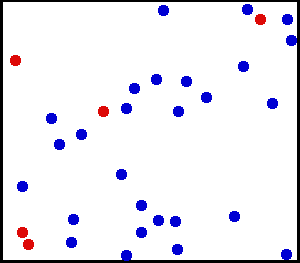
To see why, zoom in to the atomic scale. Gas particles move in random directions at impressively high speeds. Unlike planets orbiting one another under gravity, gas particles are too light, too sparsely distributed, and moving far too quickly for gravitational attraction to influence their trajectories in any measurable way.

One of science’s greatest achievements was recognizing that this random kinetic energy is heat itself — thermal kinetic energy. Thermometers, used for centuries, actually measure the average kinetic energy of these particles. Left unconstrained, conservation of energy and momentum drives particles apart, expanding to fill any available volume.

Containers work by reflecting particle momentum, creating pressure — a force measurable with gauges and related to temperature and density through Boyle’s and Charles’ laws, culminating in the ideal gas law (PV = nRT).

This understanding ignited thermodynamics, fueled the industrial revolution, and transformed human life — yet it has been applied only superficially to cosmology.

A gas will expand to fill its contain. A thermometer can measure the statistical average random kinetic energy of the particles, while a pressure gauge can measure the normal forces exerted by the particles against the sides of the container.

One point that is particularly important to make at this point, is that a thermometer doesn’t measure the total kinetic energy of the particles – only its “random-to-one-another” component.   We can put our container on a moving truck, or even a rocket ship and give the gas additional a bulk kinetic energy in any direction, and this will not register on the thermometer or on the pressure gauge.  This distinction will become very important when we being to think of flowing gases – with both bulk and random kinetic energy. 

We call the random component of kinetic energy, heat energy while we call bulk motion mechanical energy.  The conversion of heat energy into mechanical energy and back again to heat was the focus of most of 19th century physics as science was driven to make our lives better by improving this energy conversion and its efficiency.  The flow and storage of heat energy kicked off the field of thermodynamics, or the dynamics of heat.

Thermodynamics became a hot topic, because with the discovery that we could use heat to do useful mechanical work and, via heat machines, improve our standard of living.

Credit NASA. By applying heat to a gas, it would expand and could do work on its container. Thus, the industrial revolution and our conservation of energy laws.
Credit NASA, Work could be done on a gas to shrink its volume, but the kinetic energy would push back. Pressure, temperature, volume and number of particles were all related.
Thermodynamics enables the paradigm of analyzing deep space objects as Carnot heat engines.

One aspect of thinking of space in terms of thermodynamics is the Carnot heat engine.

In the case of the earth, it intakes heat energy from our hot sun and uses it to create ocean currents, weather, and ultimately life.  After exploiting this useful energy, the earth sends the energy, now at high entropy and less useful –  to cold deep space.

Similarly, we can replace the “earth” heat engine, by a molecular cloud heat engine that converts stellar low entropy energy into both gas flow and new stars via a stellar nursery.  Once again, the energy after doing its useful work is dumped into empty space by cold dust radiation.

Thermodynamically, we figure out what is going on in terms of energy flow – the conservation of energy, the heat flow from hot to cold, and the ultimate sending the energy into deep cold  space.

Overall, the energy is used to do useful work, and this ultimately increases the entropy of the universe.

Why Thermodynamics Challenges the Astronomical Narrative

Thermodynamics bridges the n-body world of condensed objects (stars, planets) with the continuum behavior of gases. Its limited incorporation into astrophysics and cosmology stems not from complexity, but from direct conflict with established models built on precise predictions of celestial motion.

To safeguard credibility, the astronomy field has leaned on artificial constructs: gravitational collapse, dark matter/energy, gas planets, winding problems, and more.  Here are the primary reasons statistical mechanics and full thermodynamics remain sidelined:

1. In the absence of condensed matter, gravity within a gas body is negligible — it simply does not appear in gas thermodynamics. Yet cosmology treats gravity as the dominant force everywhere – even between gas particles.
2. It brings about the concept of irreversibility to space physics.  The second law of thermodynamics introduces irreversibility: entropy always increases, preventing spontaneous gravitational collapse of gases into condensed forms. This challenges many popular scenarios and even impacts our understanding of black holes (as Bekenstein and Hawking demonstrated through entropy).

This post focuses on the first point: why self-gravity cannot contain a gas cloud, and why a container is always required. Later, we will zoom out to continuum scales, where gravity re-emerges in a different role — shaping buoyancy on continuum gas bodies, rather than individual particles and driving bulk flows in the Eagle Nebula.

Newton's Shell Theorem vs. Jeans Instability: A Critical Flaw

The ideal gas law describes laboratory gases beautifully but omits gravity entirely — a serious problem if one wishes to explain star formation from clouds.

Enter Sir James Jeans, who proposed that when gravitational attraction exceeds internal pressure, a cloud collapses into stars. This Jeans instability assumes a cloud can achieve hydrostatic equilibrium, where pressure gradients balance gravity throughout.

The equation appears plausible:

dP/dr = – (GM(r)/r²) ρ

Yet Newton’s Shell Theorem — derived using his own calculus — reveals the contradiction. In a spherically symmetric gas cloud, gravitational force at radius r depends solely on mass enclosed within r; mass outside r exerts no net force. At the center (r=0), gravity must be zero, implying pressure gradient = 0 and thus pressure = 0 at the center. But hydrostatic equilibrium requires a negative pressure gradient, and pressure cannot be negative.

This impossibility means hydrostatic equilibrium cannot exist for an isolated gas cloud without a container. Jeans’ instability, while mathematically derived, rests on an invalid physical interpretation. Gases obey their thermodynamic definition: they expand unless externally confined.

Thermodynamics therefore offers a more consistent foundation for understanding protostar formation — one we will build upon in future posts,  and to some extent has been described in previous posts here and here.  Thermodynamics not only describes how clouds collpase and stars nucleate, but also shows that Jeans gravity collapse violates the second law of thermodynamics – the entropy of the universe cannot decrease.

From Particle Collisions to Continuum Behavior

Early in the development of gas thermodynamics, physicists initially considered the particles that made up the gas to be non-interacting, having vanishingly small size/volume, but having individual random kinetic energies, and individual momentum through a distribution of trajectories and velocities.  At the average inter-particles distance, this means that all forces between the particles were vanishingly weak and that they acted independently.  I have seen this argument still propagated by astronomers that make arguments such as “atomic hydrogen in space do not form molecules because they cannot find each other”

The “no-interaction” ultimately proved to be oversimplistic, and failed to describe any properties or behaviors of gas bodies beyond the ideal gas equation.  A giant leap forward was made by the “Kinetic Thoery of Gases“, that briefly reigned as the gold standard model around the turn of the 20th century.  In this revised model of gas, the particles themselves were assigned spherical volumes via an atomic or molecular radius.   The kinetic theory model proposed that since the particles had volume, they would occasionally collide.   

It was during collisions, that particles were actually close to one another and therefore could interact.  This interaction was kept extremely simple however – limited to the sharing of both energy and translational momentum – while conserving both.  Such collisions were considered completely elastic so as to agree with the ideal gas equation of state.

The kinetic theory reached its peak in 1905, with Einstein’s characterization of particle Brownian motion and random walk translation.  This lead to the kinetic theories qualitative (but not quantitative) explanation of diffusion and heat conduction in gases.

Thus, the kinetic theory could be use to explain the spread of both gas particles and heat through a gas.

Credit wiki: The "Kinetic Theory of Gases" imparted a radius and volume to gas particles - allowing them to collide and exhibit Brownian motion.
The Knudsen number compares the mean free path of gas particles compared to the size of the "container". Provided the MFP is smaller, a gas should be considered a continuum fluid, rather than statistic particles.

In 1909, shortly after Einstein’s statistical mechanical breakthrough, Martin Knudsen demonstrated that the addition of collisions meant that, provided the container was large enough, we could fundamentally change how we modelled a gas.

Provided the mean free path of the particles (path between collisions) was smaller than the container, we could consider gas to be a continuous fluid, rather than a group of particles with statistically mechanical properties.  In the vastness of space, this criterion is certainly met despite the relatively rarefied nature of the gases by earthbound standards.

Gaseous fluid could now be considered to be made up of “fluid elements” that would have the same properties.  Fluid elements could be divided or combined to form larger or smaller fluid elements too.

All the work done on statistical thermodynamics was still valid in a continuum, but both temperature, pressure and even composition takes on continuum properties subject to modelling via continuum calculus.  For example, pressure can be considered an intrinsic state variable that exists throughout a gas, and not just a measurement that takes place at the walls of the container. 

Zooming out to nebula scales, individual particle motions fade into statistical averages: temperature and pressure. At this continuum level, adjacent gas bodies exert pressure on one another as each tries to expand. Equal pressures stabilize the boundary; unequal pressures cause the higher-pressure body to encroach until equilibrium is reached.

For a molecular cloud nebula, consider the cold, dense molecular cloud (primarily H₂) surrounded by warmer, more rarefied warm ionized medium (WIM). Pressures can equalize despite vast differences in density and temperature, creating a meta-stable interface. Diffusion mixes slowly over cosmic timescales, preserving the arrangement for long periods.

We have replaced a container having solid walls with a second gas that exerts an inward pressure equal to the outward pressure trying to expand the molecular cloud.   Each gas obeys its equation of state despite have different compositions and densities and temperatures.

Local perturbations and prevailing winds (bulk gas movement) may alter the shape of the molecular cloud, but the molecular cloud, contained by warm ionic or atomic media is primed to create a stellar nursery such as the Eagle Nebula.

A dense, cold molecular cloud contained an surrounded by warm, less dense atomic/ionic medium. Both gas bodies are roughly at pressure equilibrium.

Important Aside:  The reign of the kinetic theory over gas physics was a short one due to the characterization of atomic particle interactions also occurring in the early 20th century.  The elastic “collision” model was soon to be replaced by more complex electromagnetic interactions even between “neutral” particles.  I will use these developments, such as fluid dynamics, in future postings to further enrich our understanding of deep space objects including stellar nurseries.

Buoyancy and the Re-Emergence of Gravity

Illustration of Bouyancy Effects. On the left, the two gas bodies are stable, with the more dense gas at the centre of mass. If the more dense gas is placed on the outside, the system will be unstable as the gases will move to switch positions due to buoyancy.

There is a reason why I chose to illustrate the denser molecular cloud as being surrounded by the lighter warm ionic medium (WIM).

Reverse the arrangement — place the denser molecular cloud outside — and stability collapses due to buoyancy.

While gravity is irrelevant molecule-to-molecule, at continuum scales Newton’s Shell Theorem reasserts itself: the entire gas system experiences a central gravitational pull. This prefers denser material toward the center, displacing lighter material outward — exactly the buoyancy we observe in everyday life (helium balloons rising, boats floating, hot air soaring).

In space, buoyancy explains why dense spiral arms are embedded in lighter media, and why molecular clouds are typically contained within warmer ionized or neutral gas. The reverse configuration is unconditionally unstable — a classic Rayleigh-Taylor instability, extensively studied in fluid dynamics.

With bouyancy instability, we have all the physics/ingredients necessary to understand why Stellar Nurseries work the way they do – at least at a large scale.   All that is left is to put them all together in a model.

Below I show some of the science behind some of the structures you might spot in the Eagle Nebula and other stellar nurseries.  This is shown as just a teaser for now,  but will be addressed in future postings on aprealspace.com. 

Many of the complex structure seen within stellar nurseries result from Rayleigh Taylor (bouyancy) instabilities: (science.org)
Rayleigh Taylor instability fingers evident in the Crab Nebula (wikipedia). Note the Crab is NOT a stellar nursery - it is a supernova remnant. Yet the concept of gas dynamics is universal in space.

How Stars Disrupt the Balance: Bubbles, Winds, and Holes

A meta-stable molecular cloud can persist until the birth of hot, massive stars changes everything.  Nuclear fusion energy (low entropy) from these hot stars ultimate drive the transformation of the molecular cloud, the emissions that ultimately light it up, and the creation of additional (generally smaller) stars throughout the stellar nursery.

Early on, stellar winds — high-energy outflows — create pressurized bubbles that push surrounding gas away, often forming near-spherical cavities near the cloud surface.  Most often, these early bubbles are hidden from our view.

Along with WIM originating from the star is far UV light that keeps the media ionized, and adds to the volume by disassociating and ionizing molecular hydrogen from the walls of the bubble.

The less dense WIM bubble finds itself in a gravitational instability, surrounded by much more dense molecular cloud.

Buoyancy then channels the flow into tortuous paths toward the molecular cloud’s edge, often hidden by dust until a breakthrough creates a visible hole.

Hidden within a molecular cloud, the birth of one or more large hot stars sets off a Carnot heat engine that generates the stellar nursery
In this illustration, the bubble is hidden within the molecular cloud. In some cases, the internal Ha emissions from the internal surface of the MC/WIM bubble may dust of the molcular cloud.be visible through the dust
The WIM bubble being blown is better conceptualized in this illustration where a lot of the cloud has been removed. Followiing a sometime tortuous path, the WIM can make its way through the MC and create a hole where the WIM can join the WIM that surrounds it.
Looking into the hole in the Eagle nebula's molecular cloud, we can see the somewhat tortuous path taken by WIM as it travels from the star cluster to join the warm ionic medium outside of the cloud. The resulting hole is filled with the blue semi-transparent emissions of [OIII], and lined with Ha and [SII] emissions off of the sides of the hole that define it.

In the Eagle Nebula, our point of view of the stellar nursery is almost directly into the hole created by the escaping WIM.   Within the hole we can see the walls created by bubble as it expands and the star cluster that is the source of the WIM.

The path of the WIM may initially be spherical, but become irregular driven by the MC walls and unstable bouyancy effects.   Eventually the WIM escapes the MC to join other light WIM that surrounds and contains the MC.

Along its travels, the WIM and accompanying UV light heats, ionizes and erodes the MC from withing.  Additionally, the WIM put additional pressure on the MC from within, that catalyzes the nucleation and growth of additional star in the molecular cloud.


More often than not, the internal structure of WIM bubble is not at all smooth and regular as the word bubble, might suggest.  We have Rayleigh Taylor instability, as mentioned above, that can create mountains, valleys, fingers and elephant trunks.   These features often emit light in various intensity creating brights and shadows depending upon the intensity of the far UV and the angle that the MC surface faces the star cluster in 3D.

But bouyancy instability is the only kind responsible for these features.   Dust concentration heterogeneities can randomly expose and protect parts of the molecular cloud from erosion by either UV ionization or WIM escape routes.   In fact, there are likely a number of factors at play that create wonders such as the Pillars of Creation.  To understand these processes, we will have to understand the transport properties that arise from treating gas bodies as continuum.   This will be the future of a future posting, delving deeper into stellar nurseries.

Often glow from the “bubble” surface can be seen through the molecular cloud itself, depending upon the amount of dust, thickness of the MC, and intensity of the central star cluster.   Additional, new stars being born outside of the initial cluster can illuminate the MC both from the inside and the outside.

Usually, if the signal is strong enough, astrophotographs can reveal the turbulent conditions that also exist on the outside of the molecular cloud – where the cloud moves relative to its containing WIM.  Finally concentrations of dusty clouds can also partly obscure the escape whole and cover parts of the emitting cloud too.  This can be confusing as to where the molecular clouds starts and ends.

However, given all that confusion, there are patterns that exist from stellar nursery to stellar nursery, and once one sees a few, one can apply the same physics we discussed here and piece together what is going on in each of them.

Stellar Nurseries are not all the same, but they do rhyme

At right is my image of the Orion Nebula.  As with the Eagle Nebula, we are looking into the escape hole of the WIM from the inside a large molecular cloud complex.  In fact, I believe that a single large accumulation of WIM within the MC has created two exits – one we know of as the Great Orion Nebula in the centre of the image while a second escape hole – nebula we know as the “Running Man”   Dusty molecular cloud seems to form a “bridge” between the two clouds.

The intensity of the trapezium and other cluster stars make the orion Nebula particularly bright.  This glow also highlight the molecular cloud away from the central nebula.

Outside of the holes, we can see the turbulent flow within the molecular cloud itself, as friction instabilities coupled with varying dust concentrations pain and interesting landscape.

In this narrowband image of the Orion Nebula, a small, spherically symmetric stellar wind bubble can be seen just above the main nebula. We can see this bubble because it is close to the edge of the molecular cloud. The bubble fromed by the cluster within the main nebula creates a more convoluted, tortuous path as the winds have burst out of the molecular cloud as the stellar winds join the surrounding ionic medium.

Why the Ionic Interior Keeps Expanding

The Rosette Nebula (Monoceros) In Narrowband
Telescope: Askar 151phq; Mount: AP Mach2 GTO
Camera: ASI6200MM, – Chroma 5nm Narrowband Filters
R,G,B: (35,27,28 x 120s, Bin 1, Gain 100) – for stars; H,S,O: (52,51,43 x 600s, Bin 1, Gain 100)
Total integration time = 27.3 hrs (Dec 3 & 11, 2024; Jan 24-26, 2025) Maple Bay, BC

Once the WIM can escape the molecular cloud, it doesn’t deflate like a balloon.  The initiating star cluster continues to generate stellar winds that are joined by the stellar winds from the younger children stars.  Even more significant is the conversion of dense molecular hydrogen into rarefied WIM by the UV radiation from all of the stars.   As the stellar nursery matures, the increasing amount of WIM makes the bubble larger, and expands existing escape holes and even the number of WIM escape routes.   The net result is that the molecular cloud is forced apart and often ends up appearing as a Ha emitting shell or ring around the central cluster – and stellar nurseries often appear like the Rosette Nebula above.

The processes of star creation, through thermodynamic phase behavior and the process of conversion from molecular hydrogen to ionic medium through photo chemistry are two of the processes we will looking at in our next posting on the physics of stellar nurseries.

What Creates the Details - Flow Instabilities and Turbulence

The Pillars of Creation - cropped from The Eagle Nebula is a feature widely celebrated from images from the Hubble and JWST telescopes.
Another spectacular feature created by flow instabilities and light paths in the Eagle Nebula

No posting about the Eagle Nebula would be complete without referring to the beautiful and intricate details produced by the interaction of light, warm ionic media, and the dust containing molecular cloud.   We have been introduced to one kind of flow instability  – Rayleigh Taylor that is realized in these features.  But there are more kinds of instabilities that this that will also be addressed in a feature posting on this series.   These features are ubiquitous across stellar nurseries.

In addition to these pillars and fingers, we can also see beauty in the dust and light defined turbulence evident both within and external to the molecular cloud.

We have laid much of the foundation to understanding all these features through our discussion of thermodyanmics. What we will address in a future posting is another missing ingredient – hydrodynamics and magneto-hydrodynamics covering the transport properties and other interactions of our gas bodies that fill the universe.

The Thermodynamic Model of the Eagle Nebula

Share the Post:

Please contact me with your suggestions, requests, and comments

Other Images and Topics:

Swirls, Eddies, and Star Nucleation in Molecular Clouds

The popular notion that stars are created by the spontaneous, adiabatic collapse of molecular clouds is challenged. Instead, a more physically realistic model of protostar nucleation through hydrogen/dust condensation is proposed here (and in other postings) on this website) as well as by many other astronomers and astrophyscists elsewhere. Thermodynamics dictate that such condensation requires relatively cold and places within the cloud enable such condensation coupled with possible dew/sublimation point elevation. The high pressures required is likely provides by turbulence – both viscous and electromagnetic as evidenced by independent simulations. We can also see that for ourselves in our images of molecular clouds.

Read More

Narrowband Light & Filters – A Quick Overview

Using the fascinating and recently discovered Squid Nebula (Ou4) as an example, I discuss the use of narrowband filters to image emission nebula. To emit light at specific narrowbands, the right element, degree of stimulation (UV light), and even density must be present. It makes for beautiful images and reveals a lot of structure in the targets.

Read More

Globular Clusters: The Chaotic Square Dance of the Stars

Globular clusters (GCs) are fascinating cosmic entities that challenge our understanding of chaos and order in the universe. These ancient collections of stars, some over 13 billion years old, exhibit a dynamic system that thrives amidst unpredictability. As we explore the intricate dance of stars within these clusters, we uncover the secrets of their longevity and stability. From the mesmerizing beauty of M5 and M13 to the complex gravitational interactions that govern their behavior, join us on a journey through the chaotic square dance of the stars and discover the mysteries that lie within these stellar marvels.

Read More